Tag Archives: nutrition

Spinach Artichoke Dip

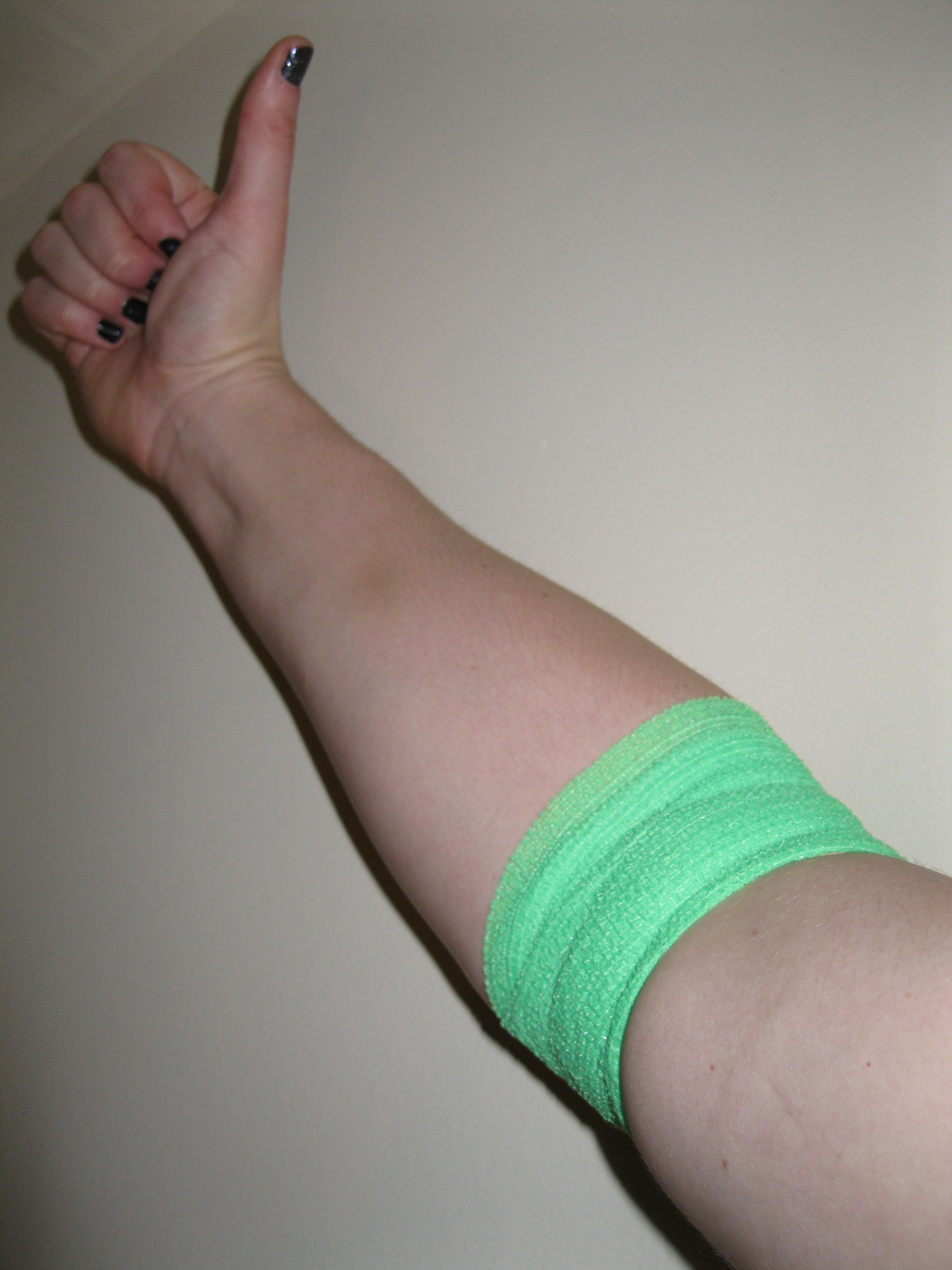
Stereotypes about vegans often include the idea that they’re anemic. I’ve donated blood for years and I panicked after I went vegan, worrying that I wouldn’t be able to donate anymore. I’m a little more pedantic about my eating habits than most people so it’s probably not surprising that my iron levels were in the high end of the healthy range when I donated Thursday evening. There are a lot of reasons you might want to give blood. I’m including 2 links to scientific papers whose results suggest that regular blood donations can reduce your risk of cardiovascular disease, especially if you’re a dude.

My personal reasons for donating blood is that one out of every 4 people will need a transfusion in their life. Imagine 4 people you care about. Now imagine your life without one of them. Wow, that’s depressing. Anyways, there are benefits to donating blood other than patting yourself on the back for saving lives: I got a free movie ticket and a snack, I know my blood pressure and my blood iron levels are healthy and in a week I’ll know my cholesterol level. You’ll also learn your blood type which is a good thing to know if you’re ever seriously hurt.
Spinach is another one of my favorite vegan goodies. Spinach can help you prepare for and recover from donating blood. One cup has enough vitamin K to give 2 people their recommended daily intake of vitamin K. WTF is vitamin K? It’s a crucial nutrient for blood clotting. This is important for after you’re done donating blood to help you stop bleeding and reduce your risk of bruising.
So why is spinach better than beef if you’re thinking about donating blood? Beef has less than 2/3 the iron and almost 10 times the calories compared to spinach, ounce for ounce. Spinach also has 600 times the vitamin K of an equal weight of lean beef. (according to http://www.nutritiondata.com)
Did I mention I’m making spinach artichoke dip? Yeah. I’ve gotta recuperate the nutrients I donated (excuse to indulge). Assemble these ingredients.
1/2 onion, diced
1 generous bunch spinach, chopped (frozen is fine, one 12 ounce package should do it, just make sure it’s thawed and well drained)
1 tin marinated artichoke hearts
1 tsp olive oil
1 12 oz. package silken tofu (I used Mori-Nu)
4 tbsp nutritional yeast
3 garlic cloves
2-3 tbsp lemon juice
1 tbsp garlic powder
1 tbsp onion powder
1 tsp Italian seasoning
1/4 tsp flake red pepper
salt and pepper to taste
Preheat oven to 350°F. Sautee onion, spinach and artichoke hearts in olive oil until onion is soft.
Blend together tofu, nutritional yeast, garlic, vinegar and spices in blender until smooth.
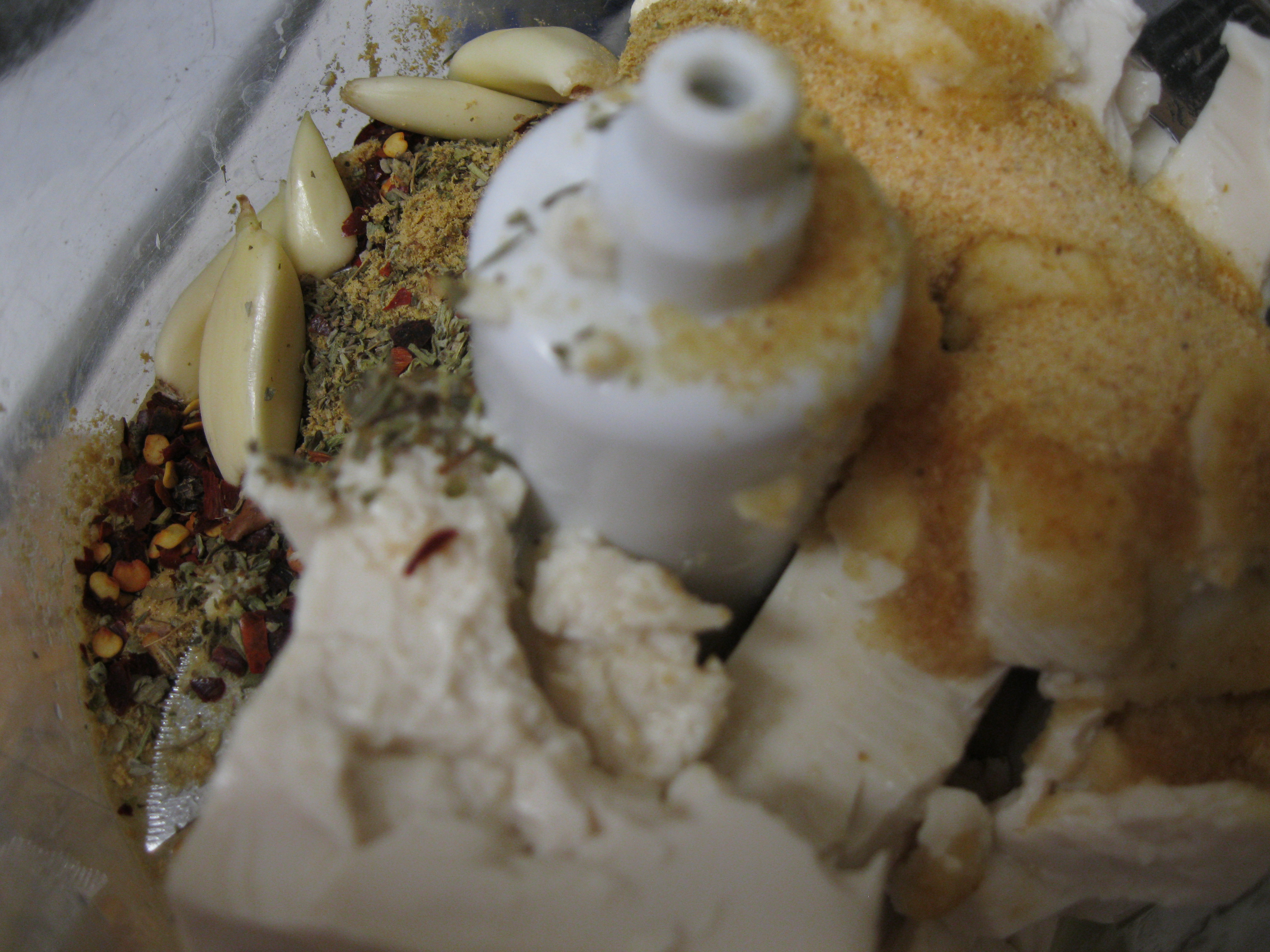
Combine all ingredients. Add salt and pepper to taste. Pour into a glass baking dish and bake for 15-20 minutes, after that, observe until lightly browned on top.
Garnish with some shredded basil. Serve warm with crackers, raw broccoli florets or carrots.
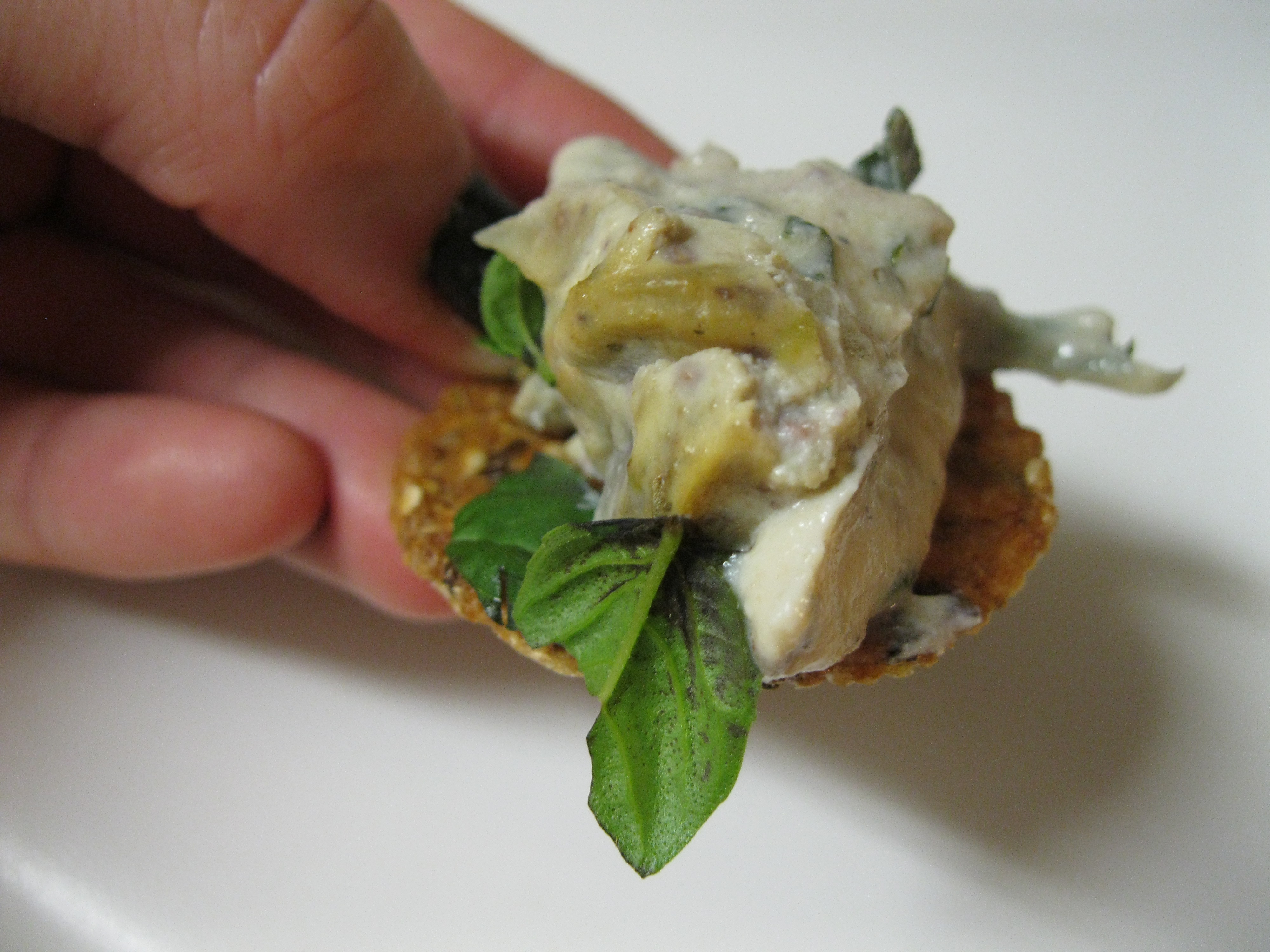
As I’ve written it, this recipe contains about 350-500 calories (depending on how much olive oil you sautee with and what sort of tofu you use). That’s about the number of calories in a blood donation. Coincidence? I think not.
This is Christie, signing off to go see that free movie.
Tagged , , , , , , , , , , , , , , , , ,

Adventures in fruit, a portrait of durian today.

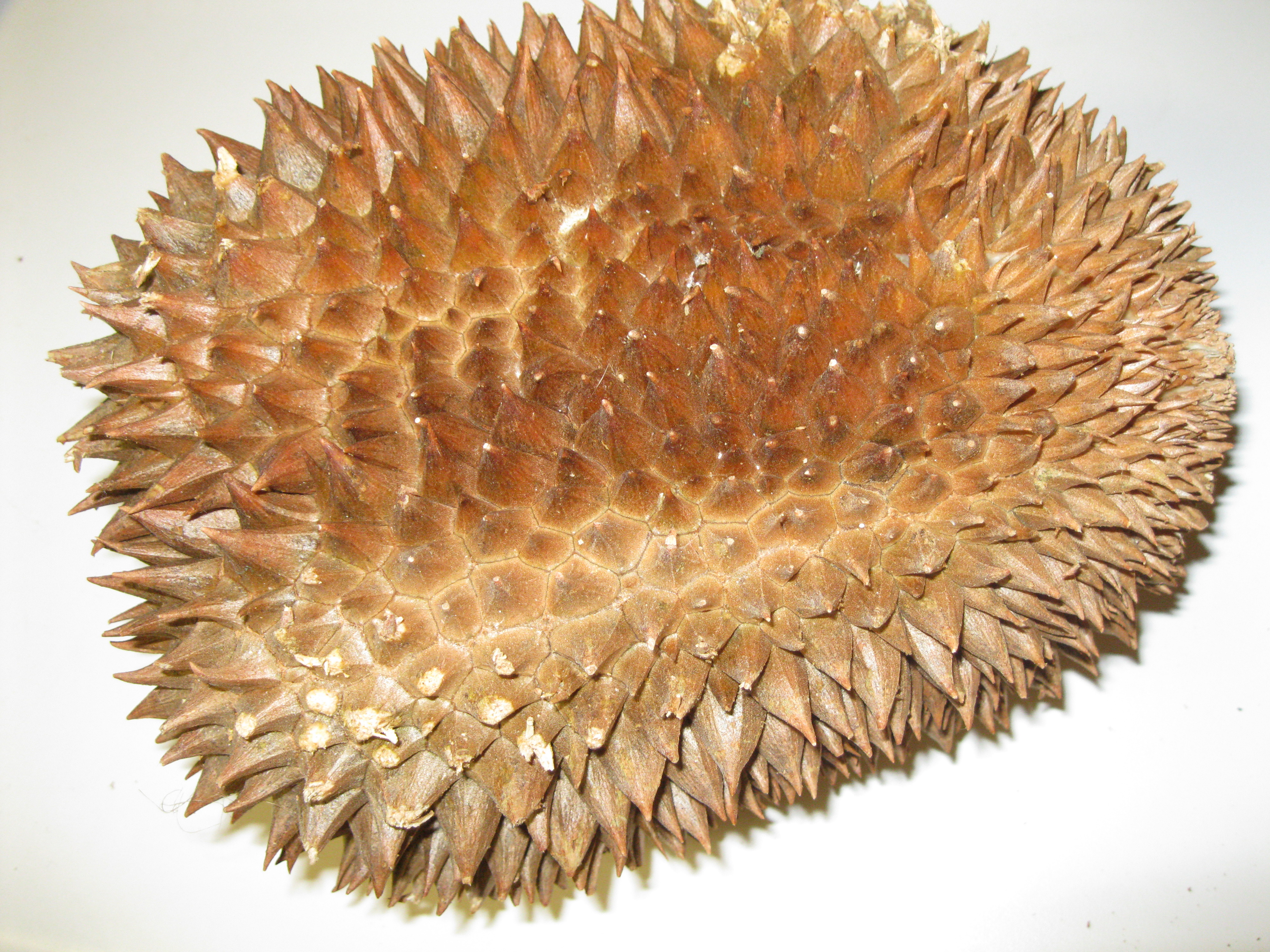
Durian is from Southeast Asia and is formidable in all of it’s aspects. It’s big (about the size of a soccer ball), has a thorny outer skin (ouch!) and distinctive odor.

Some people find the smell off-putting. I’m not one of those. I suspect it’s partly genetic. I find they smell like almonds though I’ve heard them described as smelling like turpentine, gym socks, and rotting onions. I suppose any one of those odors would keep me from eating fruit.

In terms of nutrition it’s certainly a treat. It’s rich in unsaturated fats, fiber, iron, vitamin C, potassium and the tryptophan – the amino acid required for the synthesis of serotonin. Tryptophan is necessary for the synthesis of serotonin – an important neurotransmitter. Tryptophan is an essential amino acid. That means your body can’t make it (like how it can make fat or carbon dioxide from sugar) and you have to include it in your diet.

The edible part of the fruit looks and tastes like creamy vanilla almond custard. I like to scoop out the flesh, separate the seeds and discard them, and put the good stuff into a container. I put it in the freezer and treat it like a pint of ice cream: having 2 or 3 bites whenever I get a bill or see bad news on TV.

Durian isn’t for the faint of heart. It can be expensive, difficult to find and to some, offensively smelly. However, if you’re one of the lucky souls who finds this fruit delectable, you might grow up to be a convert, like me.

This is Christie, signing off.

Tagged , , , , , , ,

Potato… wonder-food fantastic!

Potatoes get a bit of a bad rap. With the Atkins fad, people think potato and they think carbs. There’s really nothing wrong with potatoes except how we prepare them. Oily hash browns, French fried, baked and smothered with butter, bacon, sour cream and cheese… that’s probably not good for you. Potatoes by themselves are rich in vitamin C, niacin, B6, and folate and are a good source of iron, fiber and balanced protein. There are also so many different varieties: buttery Yukon Gold, creamy Caribe, all Blue, whatever. They’re kind of amazing. These are banana fingerlings.

Tonight, I’m making some roasted garlic rosemary potatoes. I sliced about 8 cloves of garlic, a handful of fingerling potatoes, a sprinkling of rosemary and a generous splash of white wine (I’m a fat-phobe, olive oil works great too… maybe I need to de-Atkins my thinking) I roasted them at 325F/160C for 30-40 minutes, wrapped in foil, until they browned around the edges and are tender. Insert into face, enjoy.

This is Christie, signing off.

Tagged , , , , , , , , , , ,

Salad rolls… kinda like a sandwich without the bread, meat and cheese.

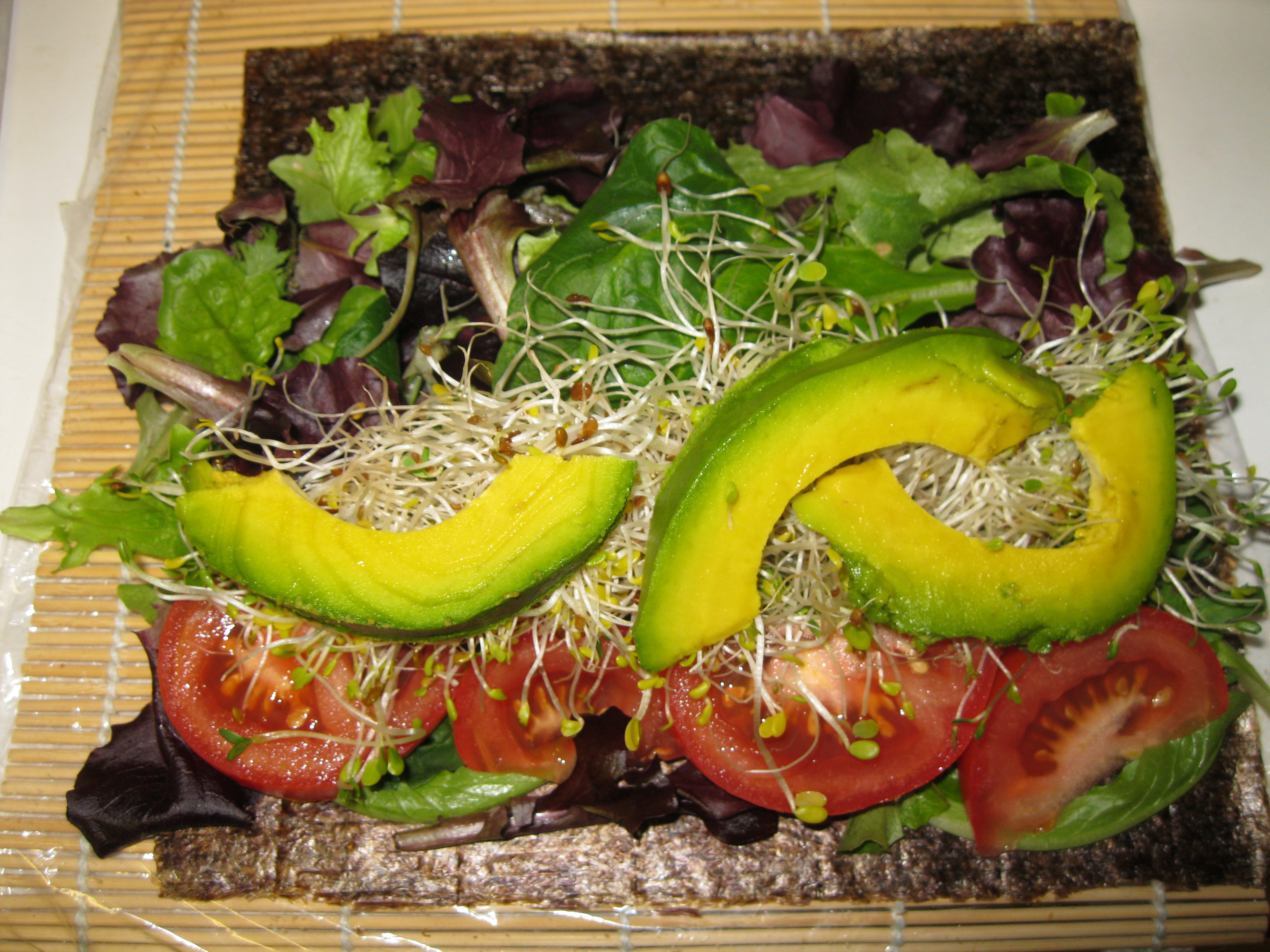
Now that Melissa is talking about how much she loves to cook, I’m going to post about more things I make when I don’t want to cook. This is a little snack that’s low calorie, high fiber, and full of nutrients. Here’s what you need to start: a sheet of nori (like for sushi rolls), mixed salad greens, and your favorite dressing.  Additional fillings can include sprouts, avocado, shredded carrots, tomato, hummus, baba ghanouj or some other spread. Get creative! If you’re using a soft spread like hummus, sprouts or shredded carrots will keep things from getting too messy. Put the nori on your sushi roller (you can get one for $5 on eBay or at your local specialty market. I covered mine with cling wrap for easier clean up.), add a generous fistful of greens, and put your toppings onto that along with a few tablespoons of hummus or whatever spread you like.

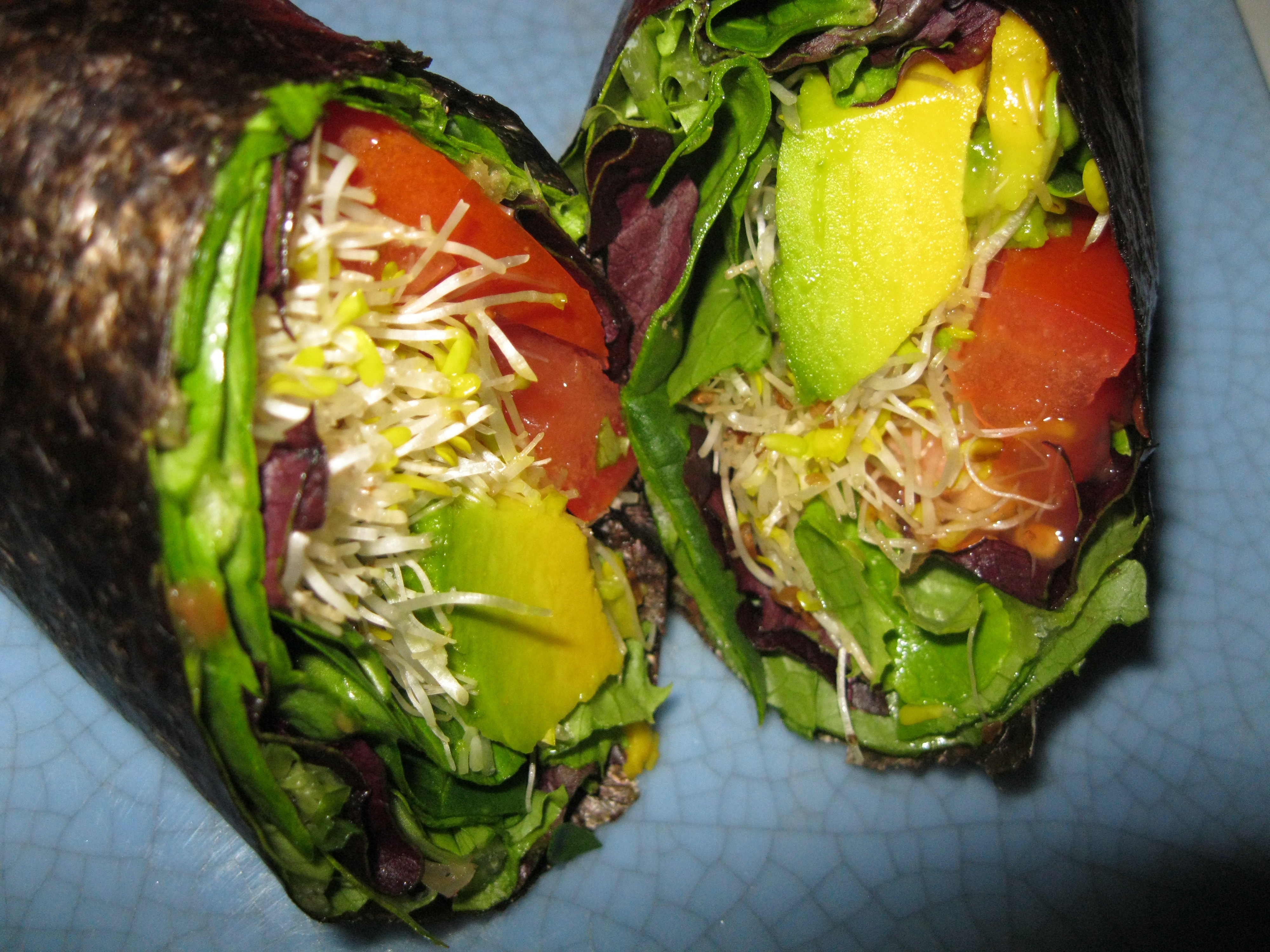
Afterward roll it gently. This part gets easier with practice. Moisten the far edge of the nori with a wedge of lemon or slice of tomato to seal the roll.

I like to slice it for presentation and dip into my favorite salad dressing. Lately it’s been a tough call between “herb tahini” and “spicy tomato basil”. There are so many possible combinations: mango and pesto hummus, garlic hummus and avocado, whatever!

Some day soon, I’ll share my recipe for home-made hummus. So many flavors: black olive, roasted red pepper, cucumber&dill, roasted artichoke heart, pesto, chipotle, extra garlic, sun-dried tomato, whatever. Let me know what combination you dream up! I want to nom them!!!


This is Christie, signing off.


Tagged , , , , , , , , , , , , , ,

Isoflavones vs. Steroids. Vegetables vs. Animals.

“Doesn’t soy contain estrogen?” People ask me this question a lot, especially when I mention that I don’t eat dairy. I call this “the milk talk”.
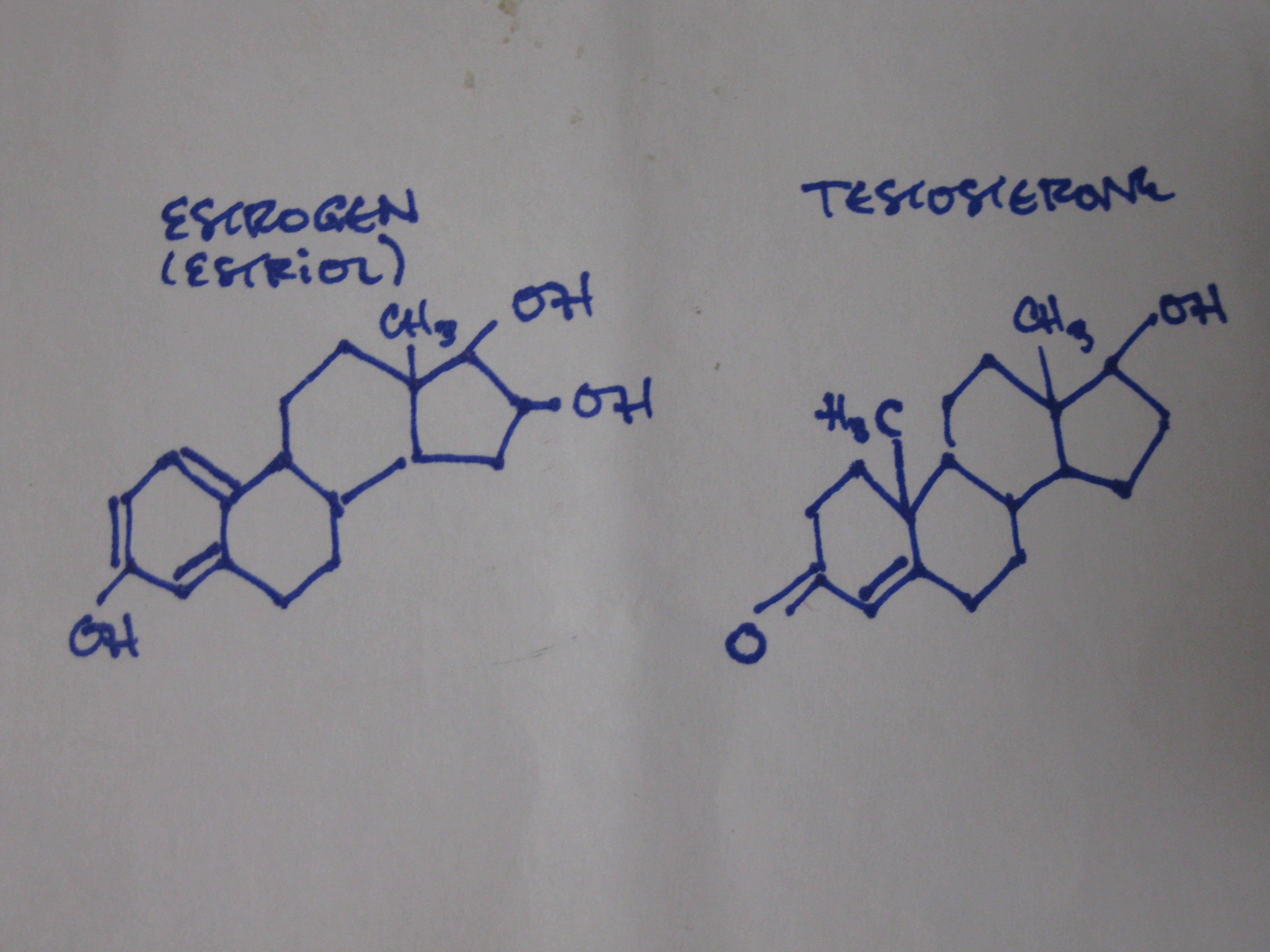
I’ll apologize in advance – I’m a biochemist so that will color my explanation… or maybe make it so colorless that you fall asleep. Anyways, what people are talking about when they say soy has estrogen in it is that soy contains compounds called isoflavones and flavones. All plants have them. These compounds are ‘estrogen-like’. This is what isoflavones and flavones look like in a simple chemist’s line drawing (think: stick figures for molecules, they don’t actually look like that). You don’t need to know what any of this means, just note the similarities and differences between all 4 drawings in this post.

Isoflavones and flavones aren’t one specific compound: they’re a group of compounds with similar structures, not unlike the group called steroid hormones. Estrogen and testosterone are both steroids.
 
I hope you’ll notice that estrogen and testosterone are much more similar to one another than to the flavone or it’s isomer (OMG you just learned some organic chemistry!). You might also know that estrogen and testosterone have very different effects on the human body: one makes you grow muscles and chest hair and the other makes you grow breasts and smooth skin. If you surmise that flavones and isoflavones have different effects too, then you’re correct: there is interest from the scientific community in flavones and isoflavones as treatments for cancer (and heart disease, diabetes, and osteoporosis). Research suggests that various compounds in the group of known isoflavones and flavones are effective for treating and preventing the very cancers that estrogen and testosterone are known to promote.
Additional fun fact: withdrawal from estrogen causes PMS. Withdrawal from testosterone causes ‘roid rage. Withdrawal from isoflavones and flavones has no documented symptom.
So you might be asking yourself, “Why is she going on about estrogen?” or maybe even. “well, dairy milk doesn’t have any hormones in it. I buy organic.” Really? Are you sure about that?
Where do you think dairy comes from? Cows.
All cows: male, female, young, old? Female cows.
How do you get a lady cow to make milk: motivational posters? Nope, you impregnate them.Then their levels of estrogen skyrocket, but not just estrogen. Progesterone and eventually prolactin will also show up in a pregnant cow’s secretions: from urine to (you guessed it) milk.
But there isn’t very much hormone in dairy milk, right? The concentration doesn’t matter, you don’t need a lot.
Why? Steroids (and all hormones) operate in something scientists call “signal cascade”. I would describe it as chemical chain letters: each cell that gets the signal (1 hormone molecule), sends copies to all of it’s closest friends and a few not-so-close friends.
If you’re really thinking, you might ask yourself, “Doesn’t pasteurization destroy it?” Well, pasteurization occurs a no more than 72C/160F (Wikipedia). Dessicated estrol begins to break down at 245C/473F (according to my Merck manual). Just throwing that out there.
This is what I’m really getting at: if you’re worried about the estrogen-LIKE compounds in soy, why haven’t you considered the actual estrogen (and progesterone) secreted by the [recently] pregnant cow whose milk you’re drinking? Anyways, I prefer almond milk – fewer calories.
Tagged , , , , , , , , , , , , , ,

Lasagna… hold the meat and cheese, please.

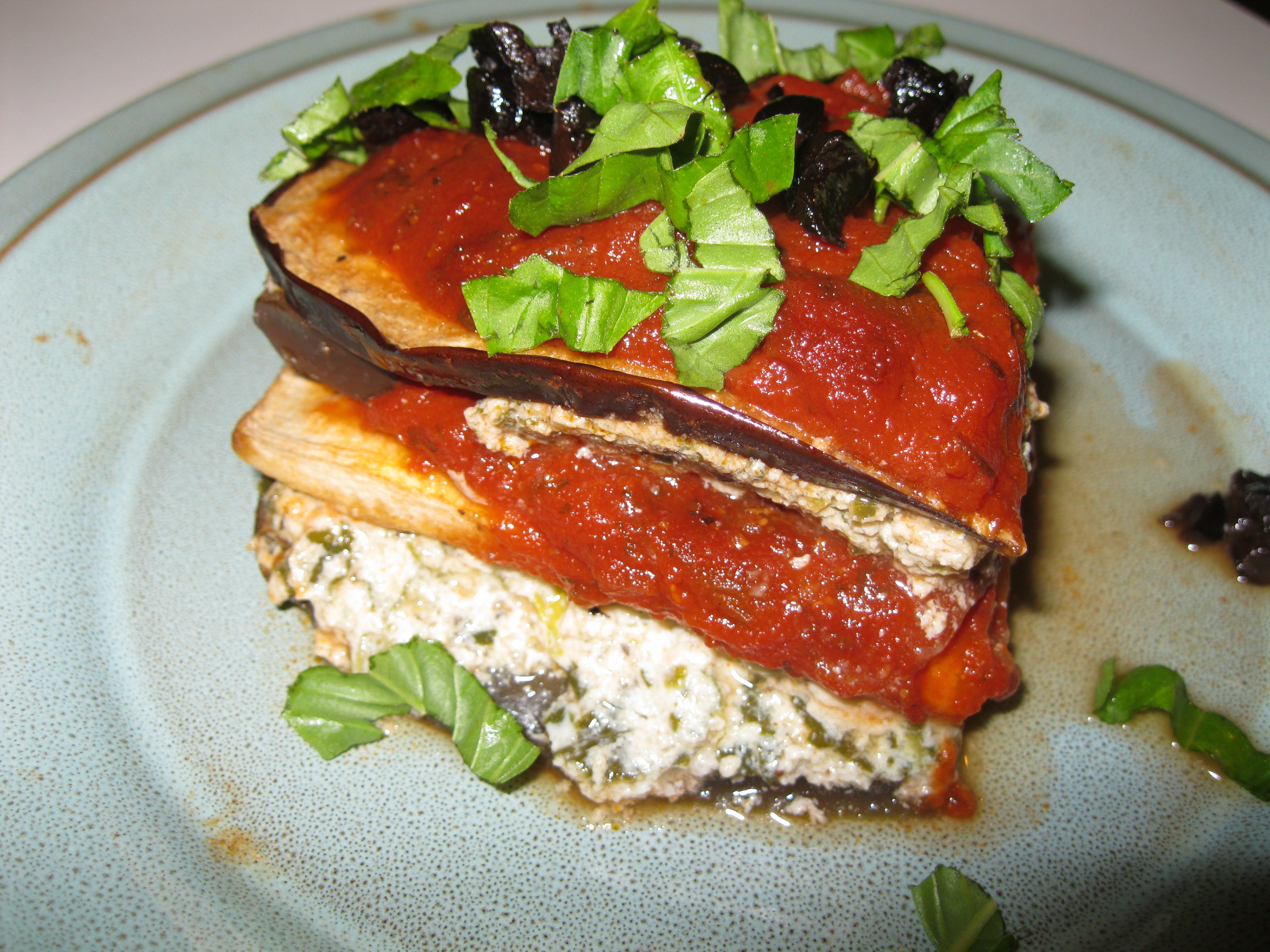
I usually use eggplant in place of lasagna noodles because of the whole… alergic to pasta thing but I encourage you to use it if you’re so inclined. The great thing about eggplant is that it’s also low in calories relative to traditional semolina pasta and has a lot of fiber and nutrients that pasta lacks. I’m biased. I dig plants.

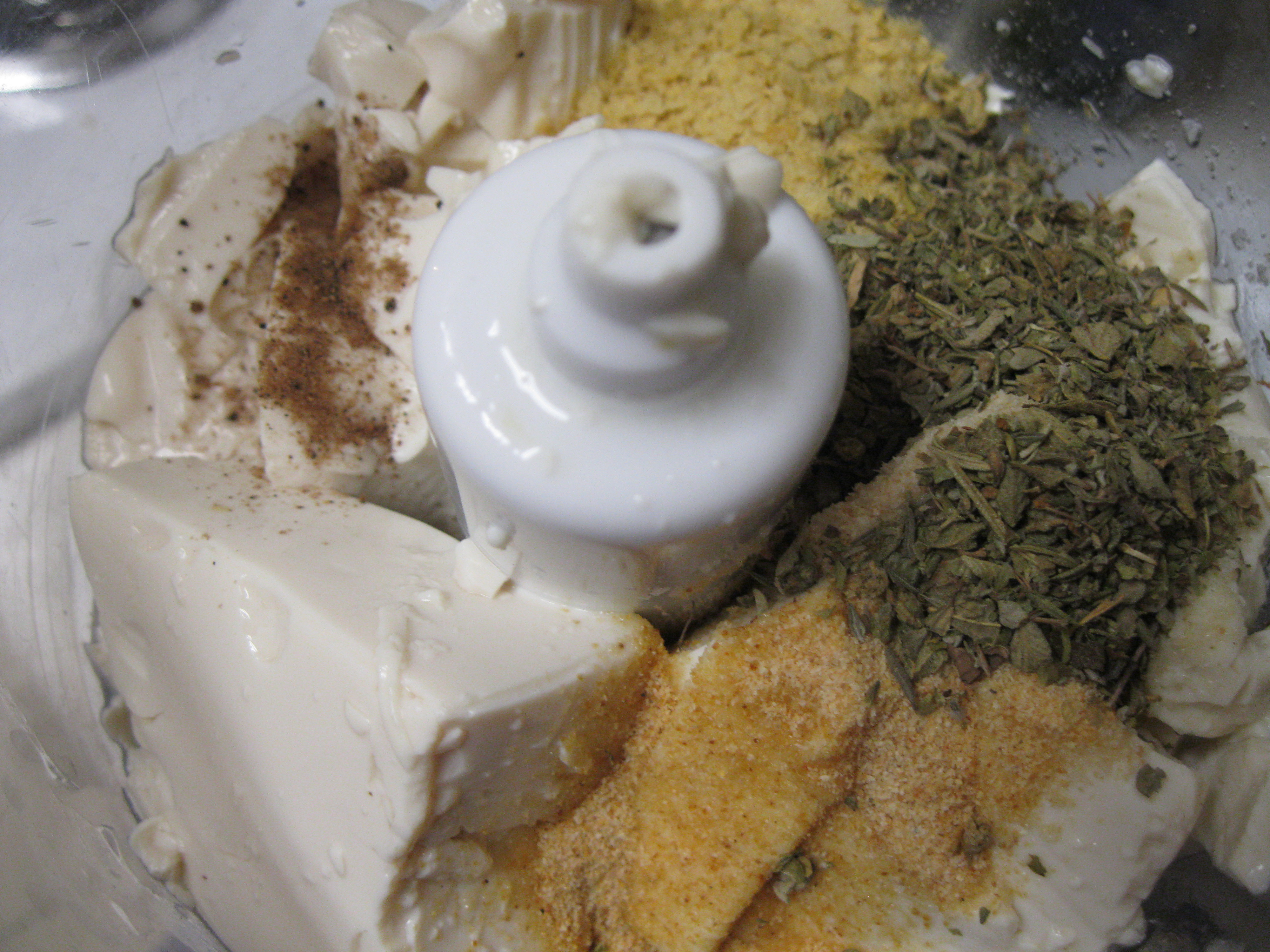
For this recipe I took a large sized eggplant (2 medium would do) and sliced it thin. I wouldn’t recommend soaking the eggplant for this recipe since it can get kinda soupy if you do.I leave the skin on but you can remove it if you want. Pre-cooking the eggplant will result in a softer texture, you can do this by pan frying it or baking it until golden brown. This is my recipe for vegan ‘ricotta’. It’s a little more flavorful than regular ricotta cheese but I doubt anyone will complain.  In your blender or food processor, combine the following:

1 16oz. box firm silken tofu (I like Mori-nu for this recipe)

1 tsp onion powder

1 tsp Italian seasoning

2 tbsp nutritional yeast (optional but recommended)

1tsp garlic powder

1 2 tsp starch (I used arrowroot)

1 pinch nutmeg

garlic salt to taste

Blend all of this until it’s uniform and creamy. After this mixing step, I added 2 generous handfuls of spinach – this is optional but a girl needs her iron.

I blended it lightly and then spread it on a layer of eggplant that I had positioned on a lightly oiled baking dish.

I put another layer of eggplant on top, (you can make more layers if you want but it’ll take longer to cook) followed by a generous helping of your favorite pasta sauce. I buy whatever is vegan, gluten-free and on sale. Cover with foil and bake 35 minutes. Remove the foil, toss on some crushed walnuts, if desired and bake another 20 minutes.

I served it garnished with some sliced olives and fresh basil.

This is Christie, signing off… I will probably eat that whole dish of lasagna tonight.

Tagged , , , , , , , , , , , , , ,

Cheese… vegan style.

You: Don’t you miss cheese?

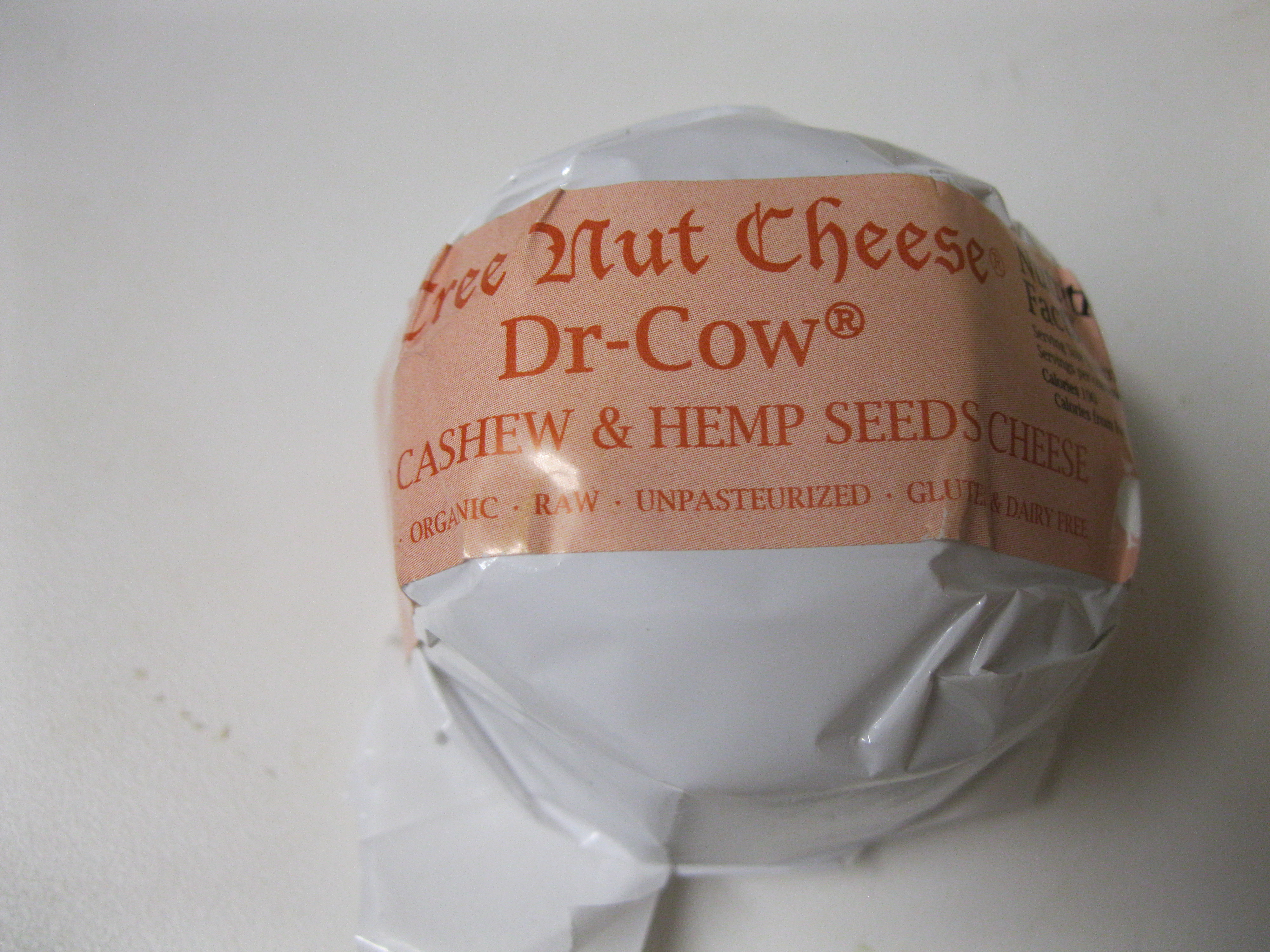
Me: What, do you think I’m a communist!? Of course I miss cheese. But you want to know why I haven’t gone back to my one wedge of manchego per week habit? Cheese tastes different to me now. It’s bitter. Milk too. When I get coffee and they give me dairy instead of soy, not only do I get pimples the next day but it tastes bitter (I return it, it’s not worth the farts and zits). I suspect I was so used to whatever it was that makes dairy taste weird to me now that I just didn’t notice. It reminds me of when I switched tap water for distilled – now Florida tap water tastes chemical. Weird. Anyways, there are some great cheese substitutes out there. My favorite for cheese and crackers is from Dr. Cow.

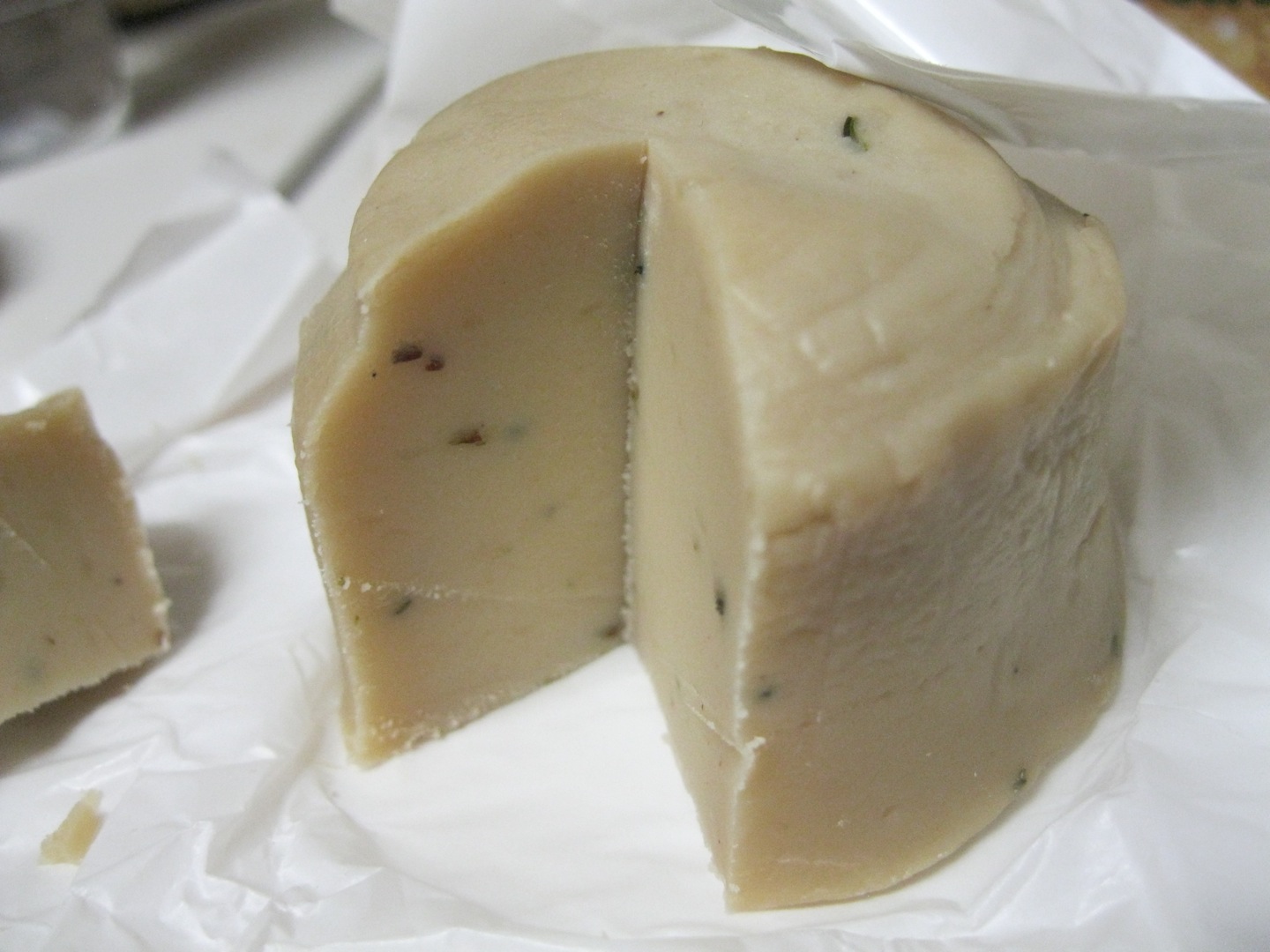
This company makes a range of tree nut cheeses. Feel free to make jokes, I do. Macadamia and cashew nuts seasoned with delicious exotic things like dulse (a kind of seaweed), hemp (a relative of hops, like in your beer) and Himalayan sea salt. It’s got a good texture for slicing and putting on crackers and is actually a raw food! I wouldn’t consider it a replacement for any particular type of cheese, it’s really a food all it’s own. You might find it’s a little pricey, usually $8 or so for a 2.6 ounce chunk. It’s about the same as you would pay for a similar chunk of seriously fancy aged Spanish cheese like manchego, just without the lactose and cholesterol. I can rationalize it… easy.

I wouldn’t think twice about serving this to strangers at a cocktail party. I love this cheese that much.

This is Christie, signing off… to finish that little cheese wedge.

Tagged , , , , , , , , , , , , , ,

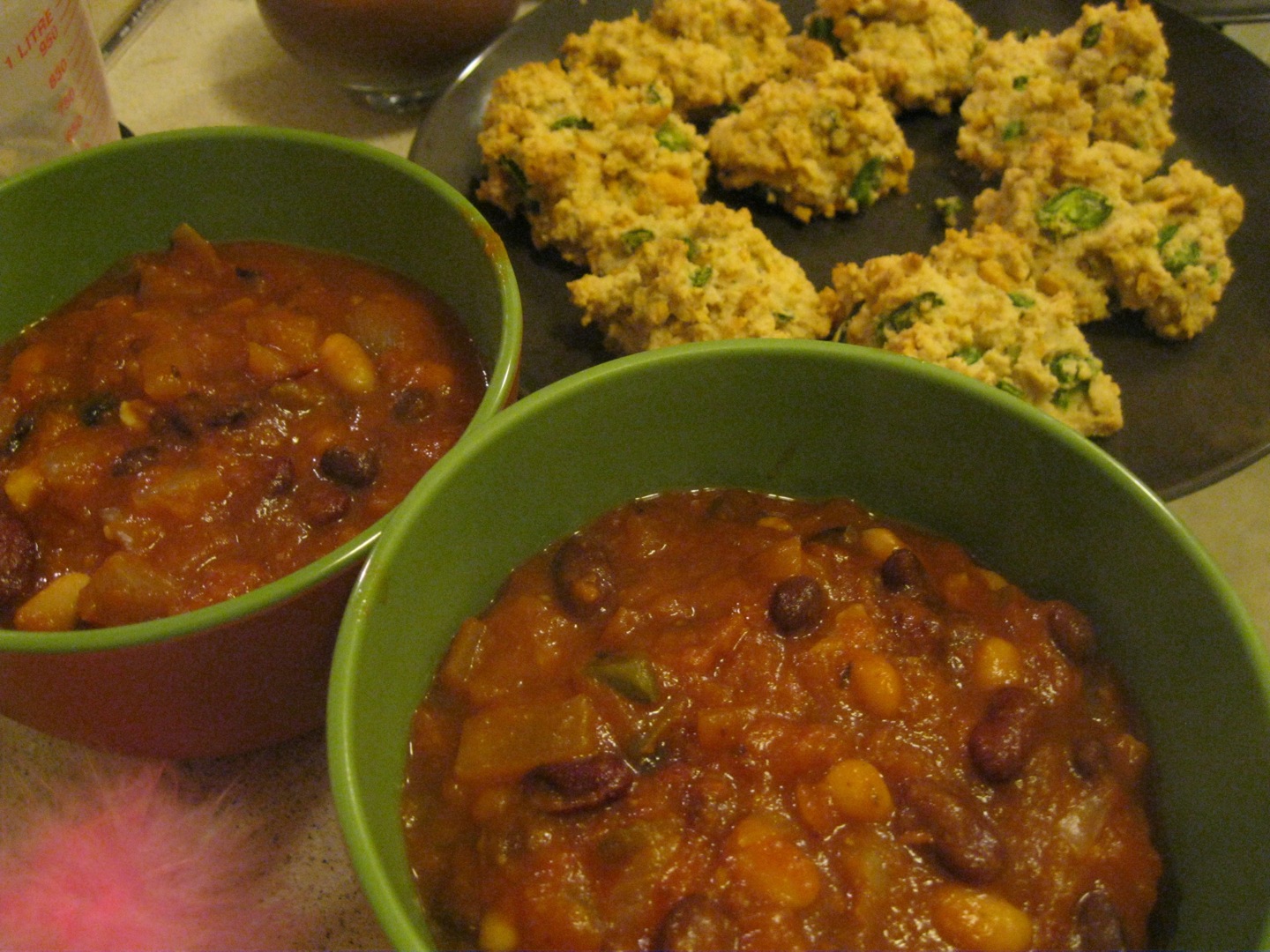
Chili and Cornbread: the Vegan/ Gluten-Free Way.

This is how most of my cooking adventures with my best travel buddy begin.

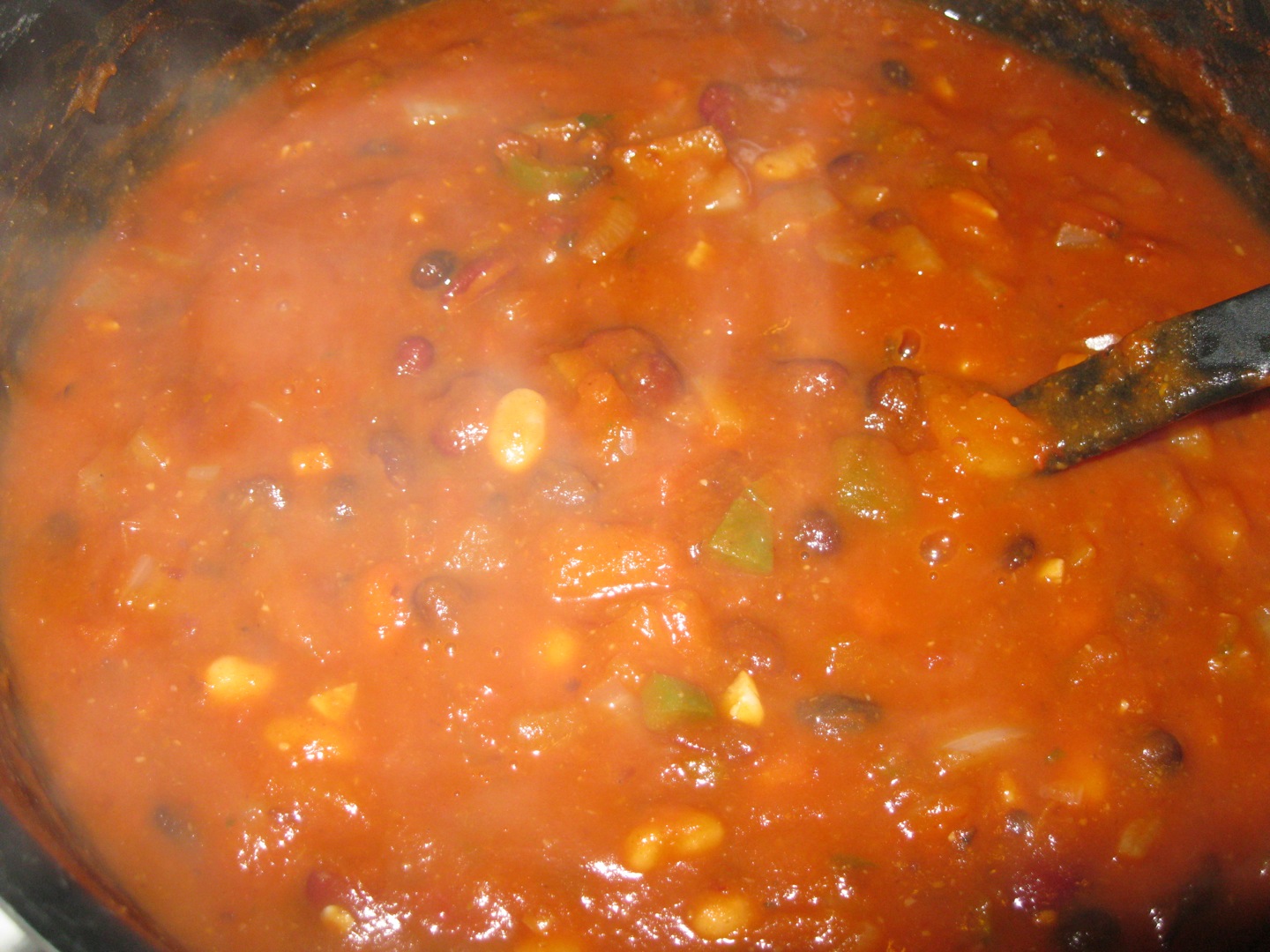
We didn’t actually leave the kitchen… except in our mouths… MINDS! I mean our minds. We made chili this particular evening. This recipe includes winter squash. We decided to use canned pumpkin but an equal volume of roasted butternut squash, acorn squash, or whatever you can get your hands on should work perfectly. The squash adds its own unique flavor and balances the acid from the tomato with the heat from the peppers. Normally the lard from ground meat would do that job but this way you don’t have to add a lot of grease to get a delicious bowl of chili. To start, you’ll want to assemble the following ingredients.

3 tins of beans (any variety), include the liquid when you add them to the recipe

28 oz tin crushed tomatoes

1 15 oz tin pumpkin

2 chiles, minced (we used jalapeno)

3 chipotle chiles in adobo, minced

1 onion, chopped

3 cloves garlic, minced (we used 6 but we love garlic)

1 tsp cumin

pinch of cinnamon

1 tsp ground coriander

1 tbsp chili powder

salt to taste

hot sauce to taste

Add the onion and a dash of olive oil to a large pot.  Stir on medium/high heat until the onions begin to turn translucent. Combine the rest of the ingredients except for the beans and liquid. Heat to boiling. Add the beans (we used white, black and kidney but any mix would do) and adjust liquids to desired consistency with bean liquid and possibly water. Taste and adjust seasonings if necessary. Garnish with cilantro. If you like your chili really spicy, include the seeds from the peppers, otherwise, discard them and add a little hot sauce for pep. Wear gloves when mincing the peppers to prevent an evening of burning fingers (sorry, Brent).

3 cups almond flour

1 tsp baking soda

big pinch of salt

1 generous handful of shredded Daiya cheddar cheese

2 peppers, minced (again, we used jalapeno)

3 tbsp starch

1/5 cup almond milk

Preheat oven to 325F/160C. Combine almond flour, baking soda, and salt in a bowl. Mix in grated cheese and serranos. In a separate bowl, mix the starch, almond milk, and water. Combine the wet and dry ingredients until they just come together. Drop batter in large spoonfuls onto a parchment paper-lined baking sheet. Bake for 25-30 minutes or until slightly browned on top. If you’re allergic to nuts, try this with ready-made polenta and skip the almond milk and starch.

This recipe (as written) is perfect for 3-4 people to have a generous serving. Brent and I were both stuffed and the floor also had some. Oops. I hope you get to try it!

Tagged , , , , , , , , , ,

Adventures in Fruit: Under the Bed!

This post is about monster fruit and dragon fruit – two fruits that I decided to try for no reason other than that they’re fascinating. I’m actually not new to dragon fruit. I have seen it in Central America, California and Florida. I hope you find it at your market.

I’ve seen flesh in these fruits, yellow, hot pink, and white. It tastes like and has the mouth feel of kiwi but not as acidic.

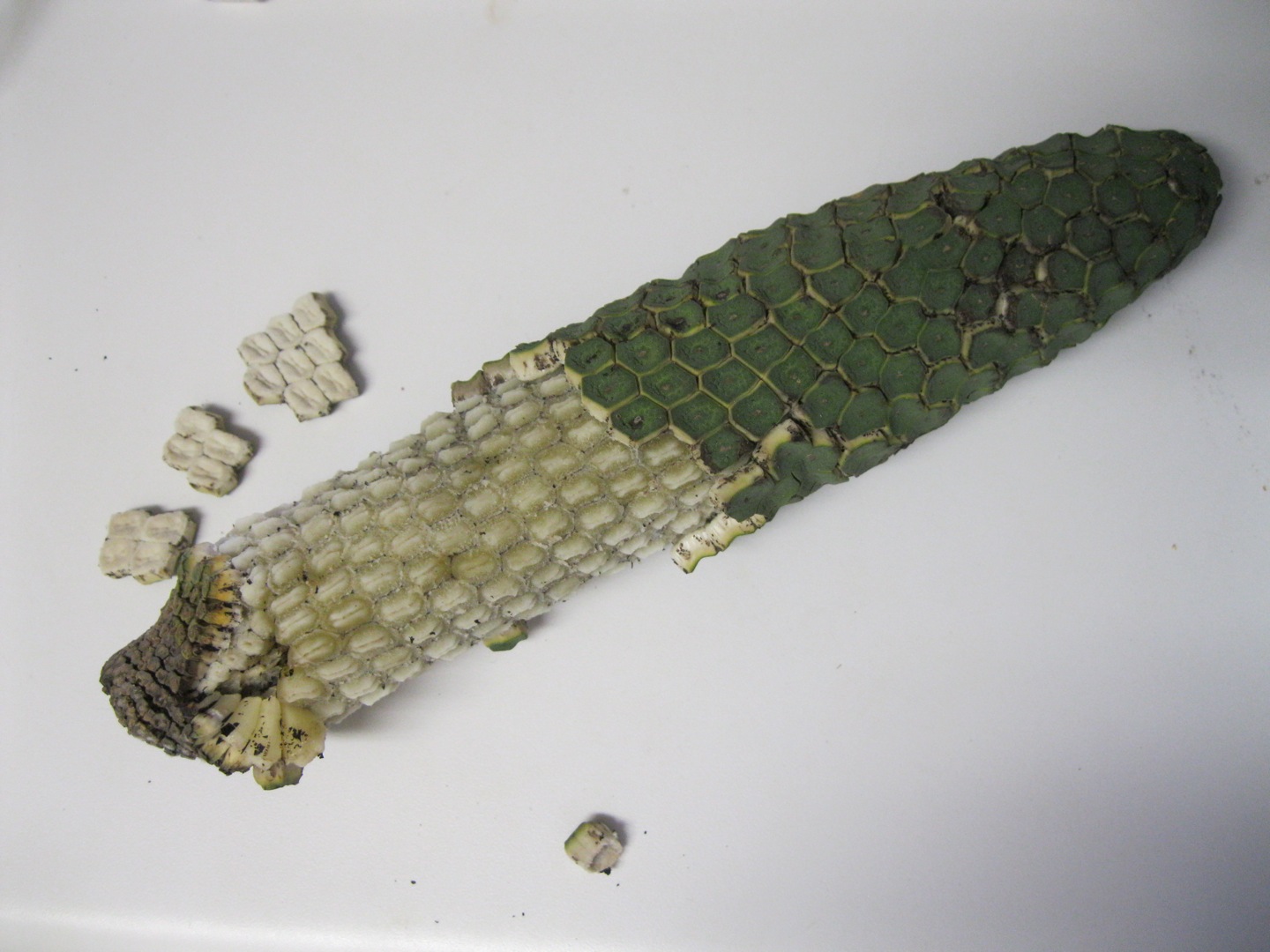
The next new fruit on the menu is called “monstera” or monster fruit.

This particular fruit is rather amazing. It reminds me of pineapple. As the fruit ripens and dark green outer scales fall off, pale white flesh is revealed. I tried pulling it off with my fingers but that got messy. I ended up eating it like corn on the cob. It tastes like pina colada. I hope you get to try this one too. I hope I find it again.

This is Christie, signing off to look for more terrifying fruit!

Tagged , , , , , , , ,

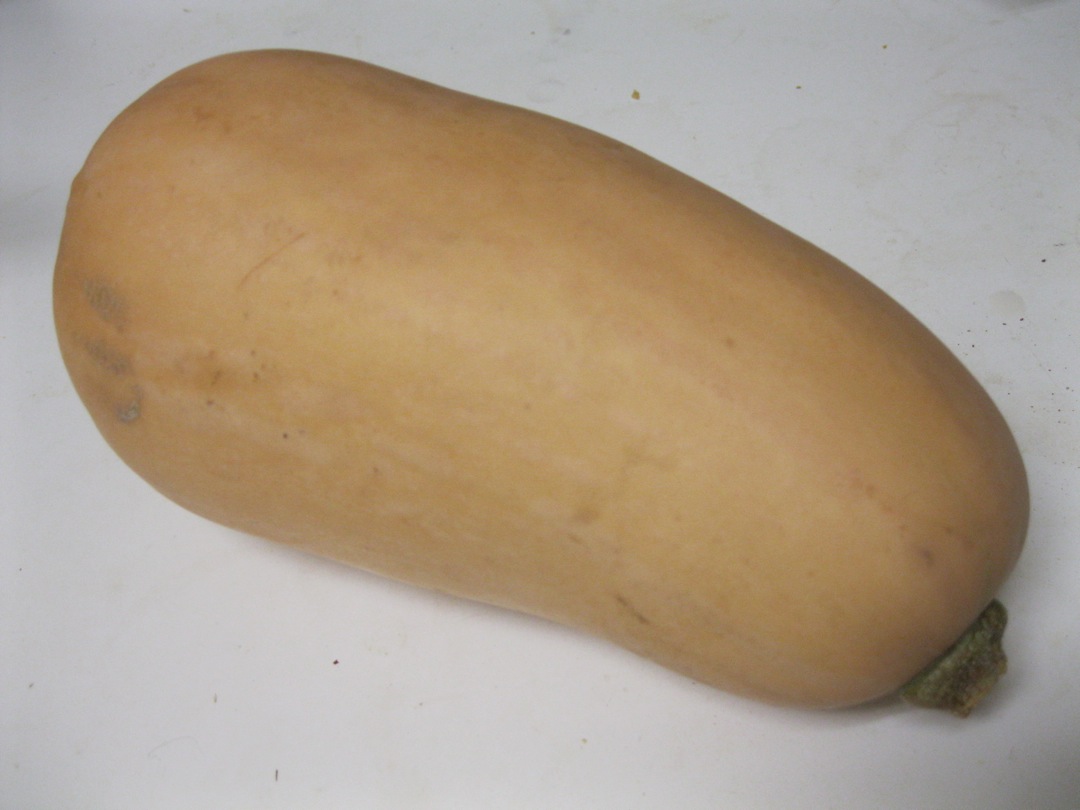
Butternut squash: that’s what she said!

Butternut squash is so easy to prepare and so delicious you might punch yourself for not having prepared it for yourself and your family sooner. It’s loaded with vitamin A and C and is also a great source of calcium and iron. All you have to do is slice it into bite sized pieces, coat the pieces lightly with olive oil and space them out on a metal baking sheet lined with wax paper. Bake them at 375F/190C for 40 minutes, turning them at 2 or three times. They should begin to caramelize around the edges. Sprinkle with a little salt and serve.

I ate mine with my variant of bachelor chow which I prefer to prepare in the microwave. I add 1/4 cup of French lentils to 1 cup of water, microwave it for 2 minutes and add another 1/4 cup of red quinoa. I microwave it 2 minutes at a time until all the liquid is absorbed. I season it with the following.
1 teaspoon of onion salt
1 teaspoon of garlic salt
a few dashes of hot sauce
a 1 inch cube of Teese mozzarella cheese (this makes it sticky enough to eat with chopsticks)
and salt to taste


You might also have noticed some Brussels sprouts on my plate too. I cut a cross into the top of each one, drizzeld a little balsamic vinegar over it and placed them on the baking sheet with the squash for the last 15 minutes of the bake. I like my green veggies pretty crispy, if you’re used to softer vegetables, cook them 25 minutes and turn them once.

This is Christie, signing off… to go bake the seeds from the squash!

Tagged , , , , , , , , ,