Category Archives: Thoughts

Is “GMO” a bad word?

Apologies in advance, this isn’t a simple issue so I have to make a lengthier post than you’re probably used to here on Turning Veganese. Also, please don’t hesitate to ask me questions. I have trouble talking like a normal person because I spend most of my time with other eggheads so I understand if more explanation is needed. Genetically modified organisms or GMOs are often a hot topic in news reports and nutrition bulletins, and I want to give you the perspective of a scientist.

A GMO is any organism whose genes have been altered in a laboratory. Genes are passed back and forth between organisms in nature often enough that there are dedicated natural mechanisms to promote and facilitate gene transfer. Scientists have harnessed these mechanisms as tools for understanding and interacting with the world around us. The intent behind each genetically engineered product is colored by the perspective of the engineer. My point is that, genetic engineering isn’t necessarily bad.

Golden rice is an example of a GMO created in 2000 as a humanitarian tool. Above is regular polished rice next to golden rice. Golden rice was engineered to contain beta caroteine which is a precursor to vitamin A. Vitamin A deficiency is the culprit for 1-2 million deaths annually, 500,000 cases of irreversible blindness and millions of cases of xeropthalmia (that means “without tear ducts”) in countries where dietary vitamin A is scarce. Golden rice has the capability to end the horrors of this tragic and preventable vitamin deficiency cheaply. Golden rice has been distributed and hybridized with local varieties to maintain genetic diversity (which I’ll talk more about shortly).  Several of the researchers who developed this boon to impoverished earthlings went on to work at big agriculture and chemical corporations which takes me to a criticism of a GMO crop.

Genetic use restriction technology (GURT) is a seed that will either produce sterile offspring or must be sprayed with a chemical sold by the company that created the GURT plant in order to activate the engineered properties of the plant. Many farmers, particularly in poorer countries save some of their seeds from each crop to plant next year. This means that farmers who buy this plant can’t save seeds (which also stifles diversity; don’t worry, I’m getting to it); they either have to buy more seeds from the company or buy more chemicals. I would compare it to drug dealing where seeds are methamphetamines and withdrawal is almost as disillusioning as being high. Still GURT is just one example of how GMOs can be bad, not a broad statement about genetic engineering, so I’m going to cover some of the shades of grey involved in genetic engineering.

The most common and most desirable mutations are ones that allow crops to survive adverse environmental conditions like frost or drought and ones that prevent them from being susceptible to pesticides, herbicides and fungicides. It really depends on the individual gene that confers these advantages as to whether I can have an opinion on whether they’re good and bad in the context of our bodies. The next obvious issue is whether or not they’re doused with poisons. If there isn’t an alternative I would buy a GMO product that was grown organically versus a non-GMO that was grown conventionally. For example, the picture to the right has a wild type peanut plant (above) and an engineered peanut plant (below) grown without pesticides. The modified one appears healthy and untouched and the wild type is looking gnarly. This particular plant is producing a natural toxin from a soil microbe, Bacillus thurongensis. This particular toxin affects insects by binding to part of the insect’s gut. People just don’t have that part so it doesn’t affect humans, kind of like how antibiotics hurt bacteria but not people (though some people have allergy responses to some antibiotics).  For decades the toxin itself was isolated from the bacterium and sprayed on crops. The issue was that it then washed into the water supply affecting insects other than those targeted by farmers. Putting the gene in the crop meant that only insects that fed on the crop were affected which good because fewer chemicals and less work would be needed to grow the crop but there’s also something not necessarily dangerous but also “not peanut” in it. So, yes. I might buy these GMO peanuts if they were grown organically. Still, I favor organic and non-GMO.

On the other hand, there’s RoundUp Ready soybeans and other crops. These babies are engineered to be resistant to glyphosate. Glyphosate is a highly toxic chemical that’s capable of killing animals, fish, birds and pretty much anything else, including weeds (above). RoundUp Ready crops can be sprayed liberally with this chemical and survive. This would be great except that some of the chemical stays in the crop that eventually people eat. Even in small doses it’s known to be a teratogen (causes birth defects) and carcinogen. Still, I might buy RoundUp Ready crops that had been grown organically because it’s the pesticide that’s an issue, not the genetic modification.

Nature also has a leg up on us and a dry sense of humor. Above is a map of the distribution of weeds that are now resistant to glyphosate, undermining the appeal and advantages of RoundUp Ready crops. Coincidentally the reddest areas are also are the places where RoundUp Ready crops are most frequently planted. As I noted earlier, nature has mechanisms that allow the very genes we manipulated in the laboratory to be exchanged between related organisms as well as the simple elegant process of evolution in its formidable arsenal. If there’s anything I’ve learned as a scientist and farmer it’s that you can’t beat nature; you can only try to work with it.

Now on to my reasons for favoring non-GMO foods. Genetic diversity is important. Often when a crop or livestock is genetically engineered, they all have identical genes. This is important because things that have identical genes have identical susceptibility to disease or adverse environmental conditions. Genetic variation is how some organisms survive while others perish. Humans often plant huge fields with the same crop. This makes fields like big cities where a common cold spreads rapidly because people are in close proximity with one another and can spread disease. Of course some people just don’t get sick. This might be genetic, chance or maybe they’re just healthier. When we engineer crops, we can take away the opportunity for plants to rely on genetic diversity to fight disease.  The icky looking photo [above] is an early image from the 2009 late blight that ravaged tomato and potato crops in the Northeast. I’ve never seen anything like it. I watched entire greenhouses go from emerald green leaves and bursting with beautiful plump tomatoes to steaming heaps of putrid grey mush in only 3 days. THREE DAYS!
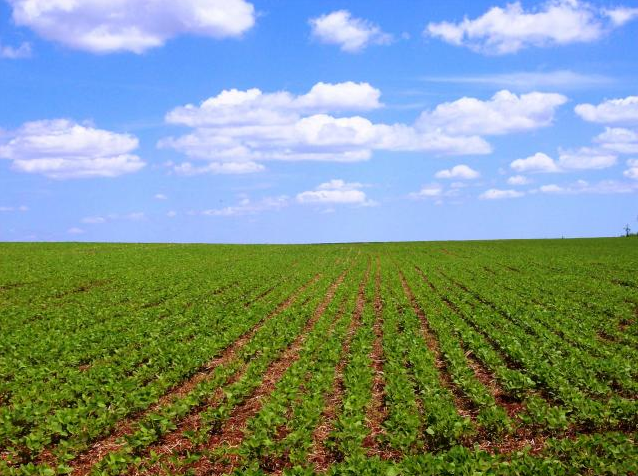
Reliance on one major crop in combination with a late blight was what caused the Irish potato famine between 1845 and 1842 and after seeing it in action, I understand why it was so devastating. If you’re not familiar with that example, consider what happens when when an entire crop of soybeans or corn or other staple is destroyed: food prices skyrocket, farmers lose their livelihoods, people starve to death. The most vulnerable people would be the most severely affected: the poor, elderly and children. This is actually my biggest reason for avoiding GMO foods: to preserve the genetic diversity that’s only possible when seeds are hybridized, harvested and saved by farmers instead of cloned by big corporations. I can’t make any other sweeping statements about abuses of the technology.

So to conclude, it’s more nuanced than “GMO good” or “GMO bad”. Sorry folks, it might not be the concrete answer you wanted but hopefully you learned something. I can still offer this word of wisdom: buying organic shows reverence for the earth in it’s entirety. It made you. Recognize.

This is Christie, signing off.

Tagged , , , , , , , , , , , , , , , ,

Bitter Melon Salad!

Bitter melon or ampalaya is one of those weird ones, you guys, but I grew up eating it.

Bitter melon is not my favorite thing to eat. In fact, it’s because of its health benefits that I endure its bitter flavor: they don’t call it “bitter” because of its jealousy and resentment. Some of its heath benefits include: lowering insulin (which benefits those with diabetes) and killing bacteria and viruses. It also helps keep the blood clean and improves blood flow which means, for a woman, less painful menstrual cramps. BONUS: My dad grows it in the garden. He’s growing two kinds this year: the darker one that I used in this recipe, and a lighter and longer one shown below.

Christie posted a recipe for pakbet using bitter melon. Today, I’m opting for a simple and raw recipe. I made this when I was visiting Christie and Brent over the weekend. Brent unfortunately could not try it because of an allergy, but I am happy to say that this is Christie-approved!

Bitter Melon Salad

1 bitter melon
1/2 onion, diced
1 medium tomato, diced
salt

First, slice the bitter melon in half, lengthwise. Then, degut it. I used a teaspoon to scoop out the guts.

Slice up the melon, toss it into a bowl, and add 2-3 tbsp of salt. Then add cold water to the bowl and let it soak for about 10 minutes. After 10 minutes, drain and rinse the bitter melon. Toss it into another bowl with the tomato and onion, add salt to taste (I suggest at least a teaspoon), mix it up, and eat it!

I spotted some strawberries in the fridge while the bitter melon was soaking and came up with a wacky idea: bitter melon salad with strawberry and onion!

OMG what a wonderful combination and no salt required! It has this great sweet explosion followed by bitter followed by sweet and the onion ties it all together. YUM YUM YUM.

Don’t be afraid of bitter melon! It has awesome health benefits. Visit the National Bitter Melon Council to learn more. I expect that both Christie and I will offer up more bitter melon recipes. I know I have a lot more to say about the magical ampalaya. In the meantime, be on the lookout and try it if you find it. –Melissa

Tagged , , , , , , , , , , , , , , , , , , , , , ,

Vegan Vacation

Guess what?! Team Turning Veganese will be hanging out later this week. In real life! I’m so excited to see Christie and Brent again and to get away for a few days. It’s perfect timing, too: I’ll be bringing some fresh items from the garden with me. Chili peppers, anyone?

I was talking to a friend yesterday and mentioned that this is one vacation where I won’t have to worry about cheating on my vegan diet lest I starve. It was great to come to that realization. I’ll be hanging out with great friends and will definitely be having great vegan food.

I’m really looking forward to sharing our vegan adventures on the blog. Is there anything you’d like to see from Team TV while we’re all in the same space? Let us know in the comments! –Melissa

Tagged , , ,

Vegan Isn’t Just About Food: Deodorant

Being vegan is usually something people associate with diet, though I don’t have enough fingers and toes to count the number of times I’ve been accused of being a hypocrite for not having thrown out all my leather shoes when I decided to take the plunge into being vegan. What we put in our bodies matters and so does what we put on them. Things we rub on our skin and even dyes and treatments from our clothing can be absorbed into our bodies, particularly when we sweat. This is why I’m writing about deodorant.

We all sweat, even if you’re living in Chicago in the winter. Typical deodorants are mostly vegan in terms of the ingredients so you have to keep an eye out for specific chemicals with indecipherable names like lanolin, hyaluronate and allantoin. There are other chemicals that you might avoid like parabens, pthalates and polyethylene glycol (PEG) that are often vegan but aren’t particularly good for your body. With deodorants I try to avoid variants of alum or aluminum which is a common antiperspirant. Aluminum compounds cause our pores to close and our sweat glands to clog with a plug that prevents perspiration. I don’t want it in my body, especially in light of research that suggests that aluminum can contribute to the development of certain cancers and degenerative brain diseases. It also contributes to the yellow stains on our light colored clothing around the armpit area when the aluminum reacts with laundry detergent… but who cares about that when there’s cancer and dementia?

I also check on whether or not the company does animal testing before I buy their cosmetics. Some vegans boycott all products from any company that tests on animals but this can be incredibly inconvenient and prohibitively expensive to track down products that work AND don’t break the bank. I avoid a few major companies that are notorious for animal testing like Procter&Gamble which makes Secret and Old spice brand deodorants and Church&Dwight which manufactures Arm&Hammer products. Otherwise I pick and choose depending on my research.

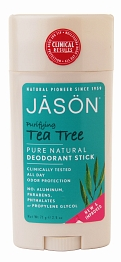
I’ve tried several different brands of vegan deodorants from companies that don’t do animal testing: Tom’s of Maine, LaVanila, Earth Science, Bubble&Bee, and JASON. I’m familiar with crystal deodorants like Thai deodorant stone and Naturally Fresh but they didn’t work for me: I sweat so much that it’s gone within 10-20 minutes. I’m a naturally sweaty girl who has periodically had odor problems on which we’ll not elaborate. I’m also operating in Florida’s 90 degree heat and 80 percent humidity during what we call the “jiu jitsu challenge” which is 2 hours of wrestling with giant sweaty men followed by a trip to the supermarket: perfect opportunity for copious sweat and subsequent formation of stench.


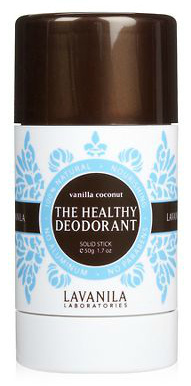
LaVanila This one smells fabulous (I tried vanilla coconut), light and neutral enough that it won’t interfere with the fragrances in most other perfumes and lotions (but I’m partial to vanilla and coconut). The texture was lovely (hybrid creamy and gel-like) and it worked. I wasn’t stinky and my level of perspiration is manageable. Some of the ingredients were highly processed even though they were all vegan and relatively inoffensive. It was pricey at $18 and came in several other variants of vanilla: plain vanilla (nothing plain about it, it smells lovely), vanilla grapefruit, vanilla blossom and vanilla lavender.

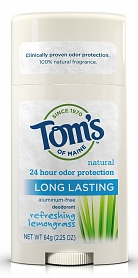
Tom’s of Maine This particular gel deodorant didn’t do quite as well as I’d hoped. I tried the lemongrass which smelled divine (perfect on Brent) but the ingredients included propylene glycol. Propylene glycol isn’t a horrible chemical in or of itself but it is easily absorbed through the skin and can bring nasty contaminants with it, so if you’re like me and come into contact with carcinogens at or on your way to work (like printer toners, industrial cleaning fluids or just environmental pollutants, consider skipping propylene glycol). It also didn’t manage to suppress my personal odor or level of sweating. The worst part is that it dried out the skin in my pits and stung upon application when I used it after waxing; I suspect this is because of the alcohol groups on some of the chemicals. On the up-side, it didn’t leave white marks on my clothes. There were several other scents including apricot, calendula and lavender as well as an unscented variety. It cost $5.50 but wasn’t worth it for me.

Earth Science This lavender scented gel product gave me about the same result as Tom’s of Maine. It provided some cover with it’s scent but didn’t retard my natural smell or significantly reduce my level of sweat. It also contained propylene glycol. Scents included lavender, herbal, unscented and rosemary. It cost $6 and didn’t leave marks on my clothes but wasn’t worth the trouble.

Jason Tea tree oil is the dominant fragrance in this particular deodorant that doesn’t contain propylene glycol but does contain a number of equally processed and easily adsorbed metals and small molecules like zinc and an isomer of propylene glycol called propanediol. An isomer has the same chemical composition but in a different configuration and in this case, similar chemical properties (not unlike sugar isomers fructose and glucose). It also didn’t do much for my stench except mask it with particularly medicinal smelling tea tree oil. It comes in a few other scents like lavender and apricot but if tea tree isn’t enough, I doubt that the others could meet my needs. This one also cost $6.

Bubble and Bee This was a chance encounter. I found this product “Pit Putty” online and was impressed by the list of ingredients: arrowroot starch, coconut oil and essential oils for fragrance with or without baking soda. The texture is pasty and it left white marks on my clothes but it really works. I’d rather have white marks than body odor. After the jiu jitsu challenge, we tested it on a grueling 6 mile hike through the mountains of upstate New York… it kept wetness and odor under control. I still smelled like geranium lime and Brent still smelled like lemongrass despite copious dirt caked into the sweat on our legs, speckled with occasional hemlock leaves and a few bugs. It was $10 for regular and $11 with baking soda (recommended) which seemed reasonable for what it does and how much I like the simple organic ingredients. It also comes in a variety of scents: lemongrass, geranium lime, jasmint, lemon clove and spearmint tea tree. It also didn’t irritate newly waxed pit skin like Tom’s, JASON and Earth Science did. Given how well this product works and how straightforward the packaging and ingredients are, I’m looking forward to trying their other products… and the white marks are nothing a damp wash cloth can’t handle.

So to wrap this up, Bubble and Bee and LaVanila were the most effective but Bubble&Bee is the winner overall for those of us who are sweatier and stinkier. If you’ve got a favorite, let me know and I’ll give it a try. If you’re one of those lucky folks who just isn’t sweaty or smelly… I have pit envy. Stinky vegans, BEGONE! Pleasantly scented vegans, go forth and dispel stereotypes!!!

This is Christie, signing off.
Tagged , , , , , , , , , ,

A Salute to Saluyot

I’m extra excited about my Dad’s garden this summer! I have always felt like his garden was really unique because of the weird veggies he grows. I distinctly remember a science project where we had to bring different leaves from around our neighborhood to school. I’m the kid who brought eggplant and bitter melon leaves.

Saluyot is one of the plants that my Dad basically farms every summer.

Saluyot should be cooked; I’ve never eaten it raw or heard of it being prepared raw. It’s slimy when cooked, similar to okra, and will slime-ify the liquid that it’s cooked in. Any online information on the nutritional benefits of saluyot are kind of sketchy, but I can tell you that this plant is good for you along with being filling.

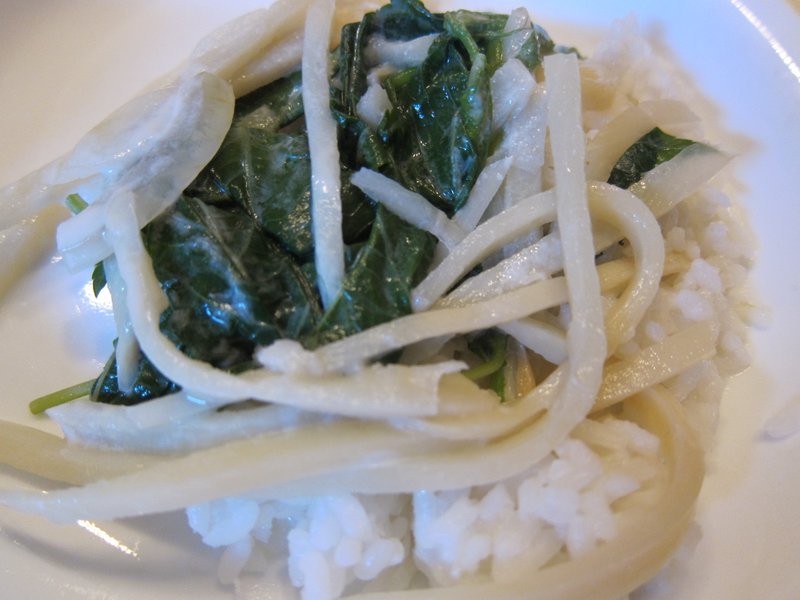
One of the many ways that we prepare saluyot is by cooking it in coconut milk with bamboo shoots.

We usually add shrimp to this, but my Mom set aside a vegan version for me. The bamboo shoots were super fresh so this tasted great — no salt or other embellishment needed. Another dish we recently had with saluyot involved squash, long beans, and eggplant (the first eggplant from our garden this season).

My Mom was the mastermind behind these dishes, so I’m sorry that I don’t have more pics or a real recipe to share. It’s only just begun, though, so you can expect more fresh veggie dishes using items picked from my parents’ backyard!

Are you growing veggies this summer? –Melissa

Tagged , , , , , , , ,

Vegan cheesy toast, scramble and bacon!

This is just a different assembly of some of our favorites which we casually call “the Heart Attack-Free, All-American Breakfast”. Side note: we’re really lucky to have located a bakery that will make custom gluten-free vegan bread for us. I find that most store bought varieties of gluten-free bread aren’t always vegan and even when they are, they taste like cardboard and sawdust. Below is Karin’s awesome multi-grain and -seed bread with Follow Your Heart mozzarella melted on top.

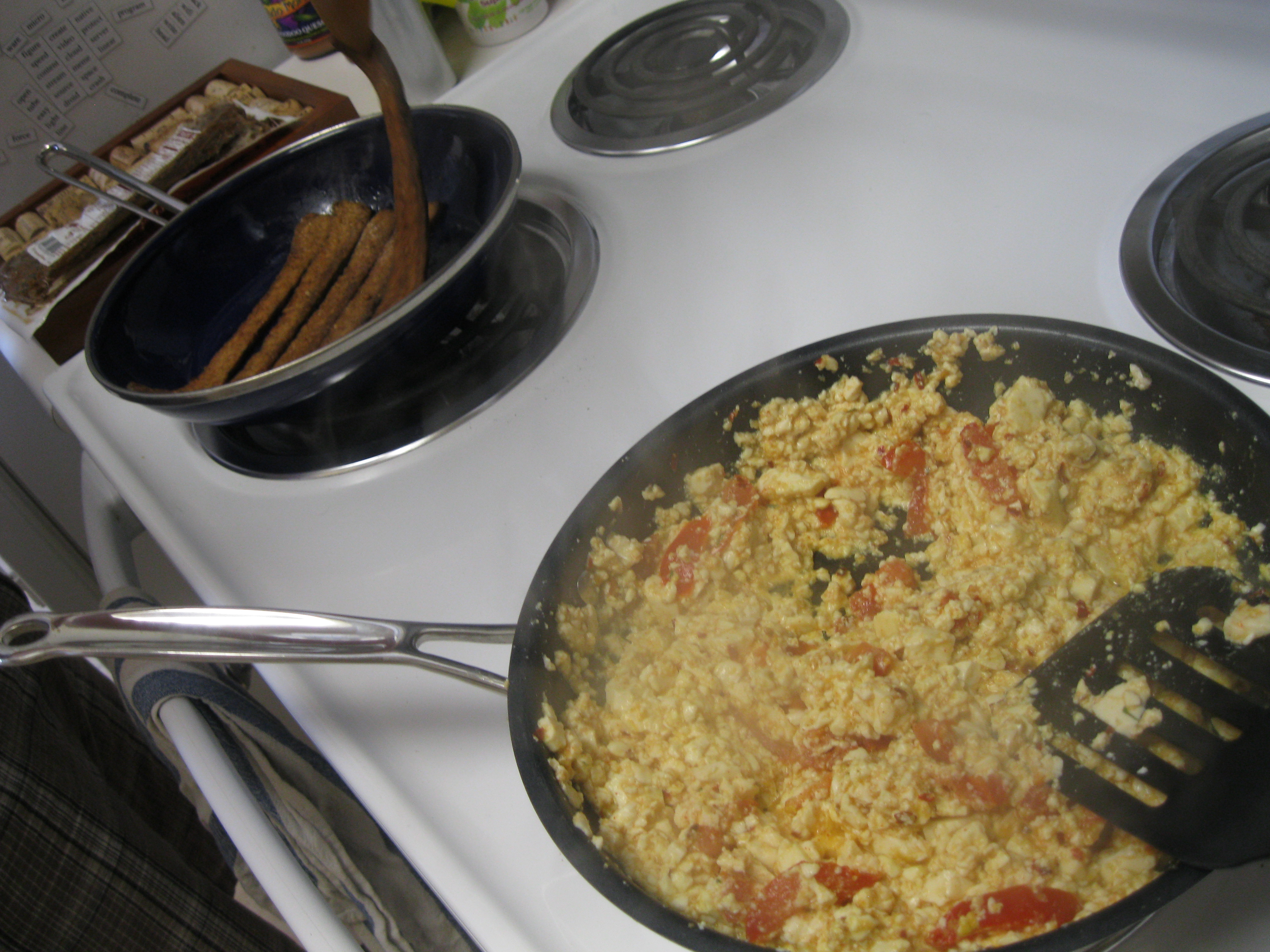
I sincerely hope that you don’t have to work too hard to find someone who can make awesome bread for you too! We toasted some vegan bread in our oven while scrambling some tofu and smoky maple bacon tempeh.

Above is our finished breakfast. It’s pretty kid friendly and I imagine that even a few non-vegans might be interested. The cheese, bread and tempeh were pre-made so we’ll just talk about the tofu.

Our standard tofu scramble is as follows:

1 carton of silken tofu

1 pinch of turmeric

1 pinch of paprika

1 tsp garlic salt

2 tsp onion powder

1 tbsp nutritional yeast

garlic salt and flake red pepper to taste.

a touch of black (sulfurous) salt is a great addition but isn’t necessary

Sometimes I add chopped tomato, as I did in this case. We just throw everything into a pan and mix until it’s hot and awesome (Brent is in the background working on the tempeh). 

Sauteed mushrooms or chopped basil also make a great addition to any tofu scramble. I see a lot of variations on this theme, so I encourage you to experiment: adding scallions, chopped tomato, sun dried tomato, minced onions or garlic, chopped bell peppers, or whatever blows your hair back. I also know a lot of people use Chinese style tofu. I prefer silken tofu… it reminds me of runny eggs. If you’re a tofu scramble pro, I’d love to hear what you do.

This is Christie and Brent, signing off!

Tagged , , , , , , , , , , , , , , , ,

Another One Lovely Blog and Overdue Thank Yous

Oh, boy. We got nominated AGAIN for the One Lovely Blog award, this time by methodpile over at girl sounds. Thank you thank you thank you! Christie addressed our last nomination so I’m gonna take this one and provide you with seven fresh factoids.

1. Christie mentioned that we met through Twitter. Our first conversation had something to do with an oversized t-shirt, peanut butter, and an elusive creature called a love octopus. You never know how your best friendships will begin.

2. My Mom worked in a chemistry lab for a food corporation, analyzing the nutrition value of meat products. So, I grew up on hot dogs and bologna and cold cuts and sausage.

3. I ate a pizza puff almost everyday for lunch my first semester of high school. No one accused me of being too skinny after that semester.

4. I often eat salad without any dressing, especially now because RANCH IS KING and I don’t eat ranch anymore.

5. Red wine can make me sick but red wine sangria makes me happy.

6. I don’t like wearing deodorant. That smell you’re wondering about? It’s me.

7. Roses are red, violets are blue, cooking’s more fun when you’re cooking for two (or more).

Now, on to the nominations — including long overdue shout outs to those who have nominated us for awards in the past:

1. Our first ever award nomination was from the wonderful Luminous Vegans back in February. I love this blog for the creativity of the recipes, the beautiful photos, and the personal tidbits. I aspire to be more like the lovely lady behind this blog. Thank you for our Liebster Blog Award!

2. Another overdue thanks goes to Emerging Vegan Sistah who nominated us for the Versatile Blogger Award. Transitioning to a vegan (and, in this case, potentially raw vegan) diet can be challenging, but this perspective from a “single-mother, lawyer, student and entrepreneur with an active Christian lifestyle” makes it seem easy… and FUN!

3. The Beach House Kitchen also nominated us for the Versatile Blogger Award. Thank you! Lee and Jane are awesome. The recipes here are way out of my league. There is a great sense of love and dedication here to good food, good people, health, and nature.

4. veghotpot has great recipes, photos, and style. There’s a lot of great personal stuff to go along with the food posts! Uber thanks to her for our Kreativ Blogger award!!

5. Filipino and Vegan. Nope, I’m not describing myself. I’m talking about the bodacious ASTIG Vegan. This blog is the bomb. I want to try making everything. Filipino food CAN be vegan AND delicious. No excuses, kababayans.

Since this is our second One Lovely Blog award in one week, I won’t list the rules again. Christie, Brent, and I appreciate all the recognition and love that we get. It’s really humbling… and also results in us giving each other virtual high-fives and shouting “F#&* YEAH!!” really loudly. Thank you to everyone who has nominated us! Be sure to check out the blogs we’ve listed.

Wooooot! –Melissa

Tagged , , , , ,

Gadgets for Budgets!

I managed to find a used soy-milk maker for $30 bucks (SoyQuick, retails for about $120) on eBay a few weeks ago and we’re pretty excited about the end products. It’s definitely a device that can help your budget and keep you from heading to the store late at night for a carton of milk.

The first step fr this particular machine is to soak and wash the soybeans. We soaked for 8 hours (instructions call for at least 4 hours to overnight). Ours needs about 1/2 cup of beans.

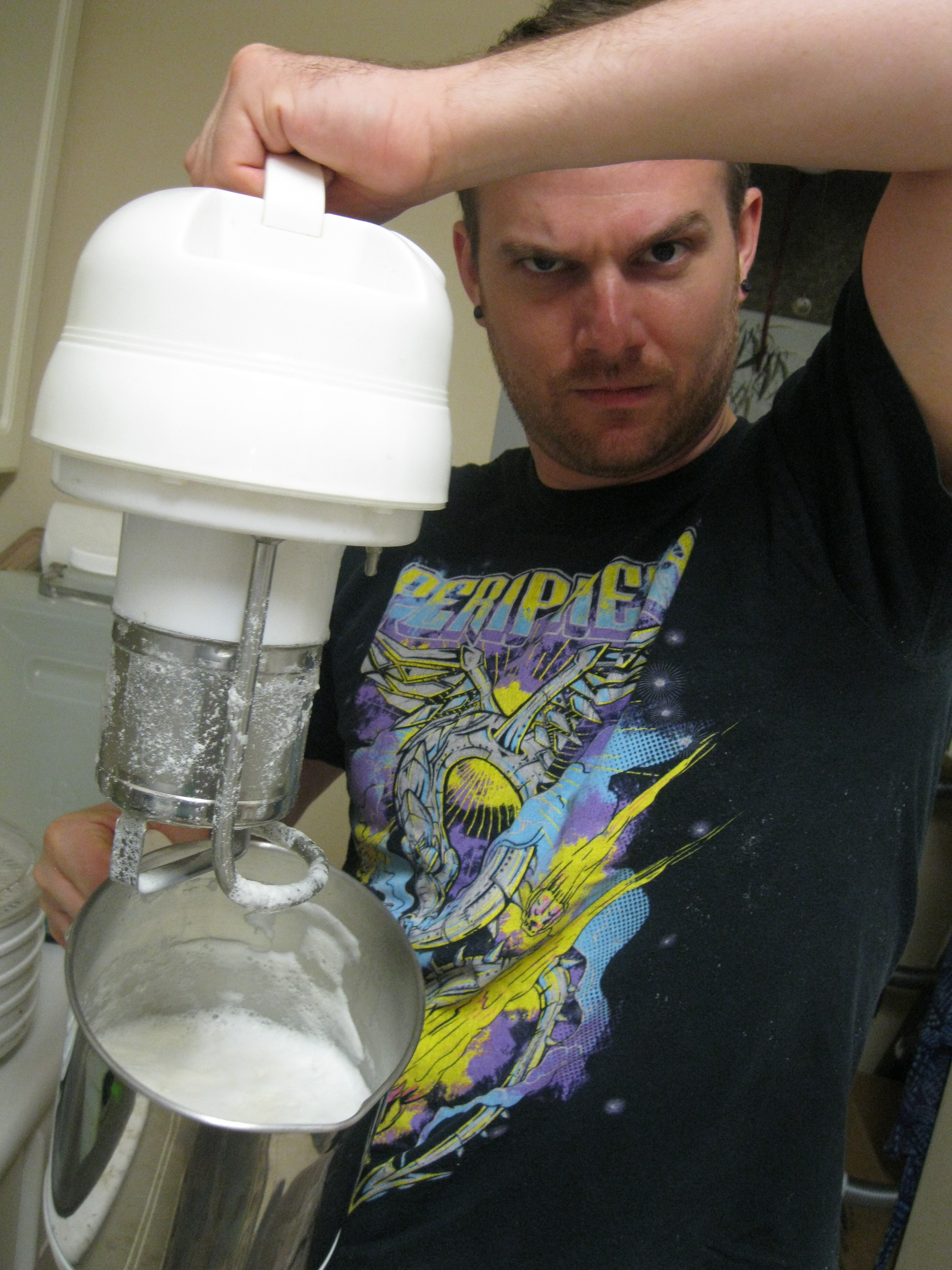
The next step is to fill the basin to the fill line with water (we used distilled water) and the cup with beans and then we put it on the counter and pressed the button. It heated the water and ground up the beans and before we even expected it, we had made our own soy-milk. It was incredibly easy and as you can see the machine is kind of deadly looking: perfect for my favorite guy to make his contribution to kitchen life.

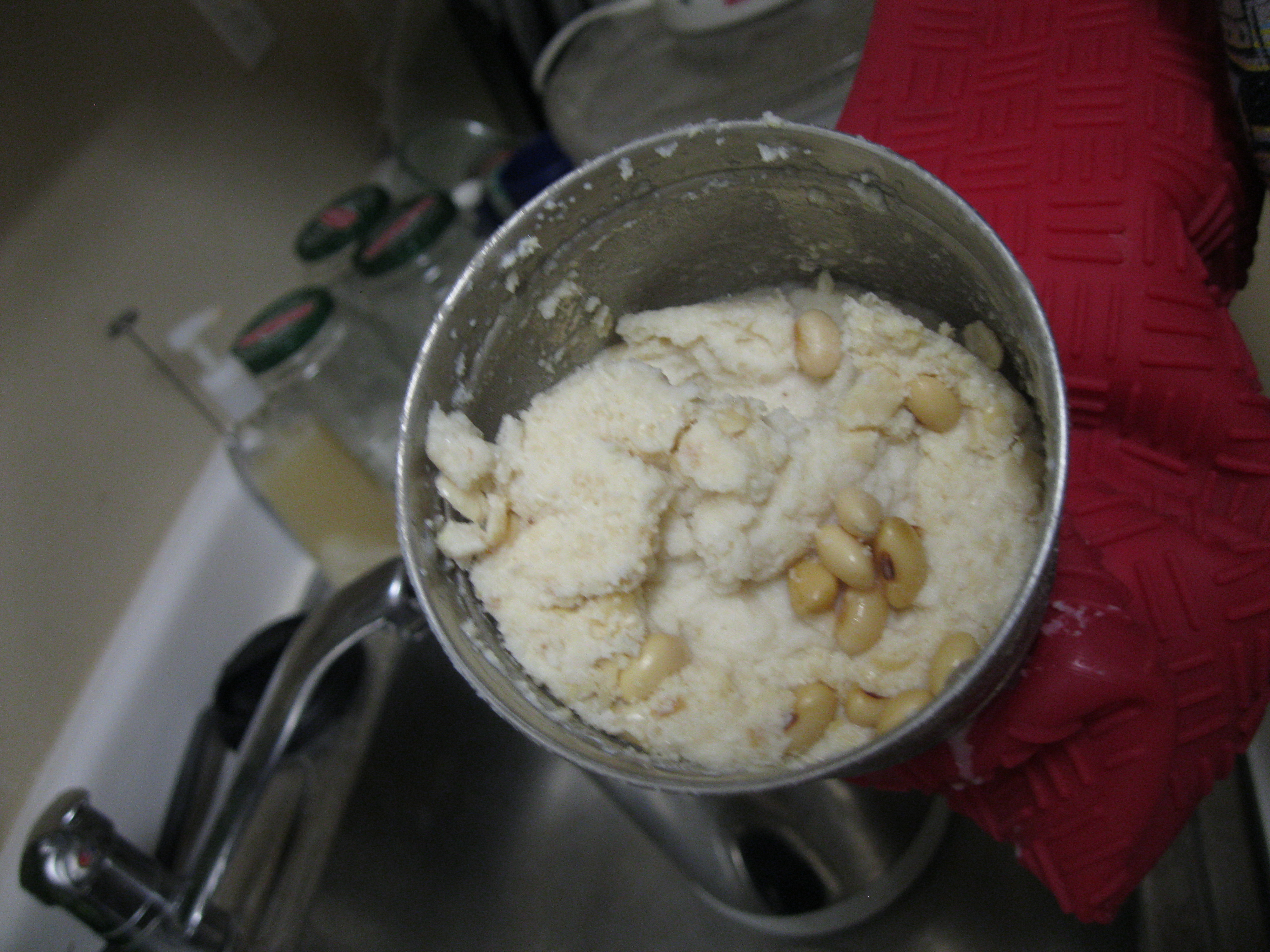
The end product consists of 2 things: a cup of spent beans (above) and the milk itself (below). Not all of the beans got ground so we might use a little less than 1/2 cup next time and see if the milk is as awesome, maybe a heaping 1/3 cup.

Based on our preliminary work with the machine, our *very* conservative estimate is that we can get about 3 gallons of soy-milk from a 26 ounce bag of organic soybeans that we bought for just under $5. That’s a STEAL! You can also use almonds, cashews, flax seeds (which I’m particularly excited about) or whatever kind of beans, seeds or nuts make your day. If you’ve got an allergy and can’t risk cross contamination, this might be your bag. I’m also excited to add carob, cocoa and maca to flavor our milks and add extra nutrients.

I’m also trying to figure out what to do with the ‘waste’ product from making soy-milk which is the cup of spent beans. I’m hoping that they can be incorporated with the pulp that results from making vegetable juice to make crackers that are vegan, gluten-free and loaded with fiber instead of calories.

This is Christie and Brent, signing off!

Tagged , , , , , , , ,

One Lovely Blog

VeganMonologue recently nominated Turning Veganese for the One Lovely Blog award. I’m about to give our seven titillating tidbits. Since there are three of us working on this blog, we often find it difficult to coordinate when we get awards so I’m throwing myself headlong into addressing this little beauty.

1. I met Melissa through Twitter so this particular blog is really born of the internet.

2. As a child, my first phrase was “Somma dat, mommy!” while pointing frantically at broccoli from the shopping cart while visiting our local supermarket.

3. As a toddler, my highchair was moved to the far end of the dinner table after repeated incidents of my picking broccoli and asparagus off my sister’s plate, biting off the head and returning the stalk to her plate.

4. I was literally afraid of raw tomatoes until I was 16 years old. That summer I made myself sick eating cherry tomatoes while working on the family farm.

5. Raw carrots give me the hiccups.

6. I don’t like plain white rice.

7. I found a stray black and white kitten in a parking lot last November that had been run over by a car. It’s skull had been crushed but it was still trying to walk and was crying pathetically. I spent 30 minutes agonizing over whether I should break its neck or take it to a vet, not sure which would cause it more suffering. Please spay or neuter your pets!

Okay, that was depressing so let’s get to the fun and exciting part: nominations!

1. I recently started following Vegan Charlie and am blown away by the honesty of a personal journey. It’s a kind of honesty that’s missing from a lot of blogs about relationships with people and food. I hope you’ll check out her writing.

2. Another new follow has been girl sounds. It’s mostly graphic but with an eclectic personal twist covers some of my favorite topics: art (mostly) and food (occasionally).

3. I’ve been following making/listening for a while and it’s always a succinct foray into a meal and the music that flavored it. I suppose I’m a sucker for the elegance of suggestion rather than depiction.

4. I’ve been internet stalking Nina and the Heartbeat for months now and she always surprises me with something that can make me stop long enough to pay attention and read the whole thing. Music and vegan food from the perspective of someone who shows deep reverence for the world around her is what this blog has to offer.

5. Elle’s vegan food diary is a blog that I aspire to be more like. She covers really interesting vegan foods with exotic flare and visually stunning images. She’s given me loads of ideas and caused me to drool copiously and frequently.

There are scads of blogs that I’d love to nominate but I’m sure have already gotten the honor so I’m passing it on to these blogs in hopes that they can get more of the attention they deserve. Thanks again to Vegan Monologue for the nomination. I know I can speak for Brent, Melissa and myself when I say that we’re grateful for the recognition and our egos are currently expanding.

The Rules of One Lovely Blog:

• Link back to the blogger who nominated you

• Paste the award image on your blog, anywhere

• Share 7 facts about yourself

• Nominate 5-15 other blogs you like for this award (last time it was 5, this time it’s 15…so do what you can.)

• Contact the bloggers that you have chosen to let them know that they have been nominated

This is Christie, signing off!

Tagged

Move over lunch meat, it’s TEMPEH!

Tempeh is a vegan food product made from fermented soybeans. Before you turn your nose up at the idea of something being fermented, remember you’ve probably eaten a number of other fermented products including all alcohol, leavened bread, yogurt, buttermilk and cheeses. Fermentation adds a number of unique compounds not normally abundant in soy, in particular B vitamins. Vegans don’t always get enough B vitamins so it’s good to know good sources of these crucial nutrients along with protein, iron, calcium and trace nutrients like isoflavones and flavones that studies suggest may have preventative effects for heart disease and cancer.

We’re eating some tempeh that I see at a lot of supermarkets here in South Florida. It’s pre-marinated in a variety of flavors. We especially like this one (shown below)

I usually treat it like bacon except that it’s actually good for you.

I browned it lightly in a non-stick skillet and wrapped it up in a cabbage leaf with greens, bell pepper, and some Follow Your Heart sesame miso dressing that we’ve been enjoying for salads.

I’m a big fan of tempeh and I hope you’ll get to know it a little better if you’re not friendly already. It’s awesome!

This is Christie, signing off.
Tagged , , , , , , , , , , , , , , , , , ,