Sunday Bunday!

The theme of this particular Sunday bunday post is whether or not a rabbit is the right pet for you and your family. Easter is a time when rabbits are sold to unwitting buyers; they often end up dumped, dead or neglected. Education is a really important part of preventing this from happening. If people know what they’re getting into when they buy that cute puff, rabbits are less likely to be victims. I’m about to share what I’ve learned about bunnies with you, even if it’s too late.

1. Rabbits are considered exotic. Unless you live in a country where rabbits are popular pets like Germany or Japan, good veterinary care for a rabbit is extraordinarily expensive. Veterinarians who specialize in rabbit care are hard to find and a vet who is great with cats or dogs may have no idea what to do with a rabbit. Just to give you an idea, I haven’t paid less than $400 for a vet visit. Pet insurance is available for rabbits in some states starting at around $12 per month. If you get a rabbit, I would recommend it.

2. Rabbits are a long term commitment. They live 8-12 years. Think about where and with whom you’ll be living. Aggressive cats or dogs and small children can be a death sentence for a rabbit. Many apartment buildings also don’t allow pets.

3. Rabbits are high maintenance. Rabbits don’t show illness by whining or sulking like cats or dogs; as prey animals they don’t show obvious signs of distress. Since they can go from happy and healthy to dead in a matter of hours, watching them closely for subtle deviations from normal behavior is a must. This also means that you have to be able to drop everything and get your rabbit to a vet ASAP on the faintest hint something might be wrong. If you don’t have that kind of flexible schedule, consider adopting a cat. Regular nail trimming (every 6-8 weeks) and hair trimming for long haired breeds, teeth checks (twice a year by a vet) and close monitoring of food intake and litter boxes are vital to a rabbit’s health as well as diligent household cleanliness since crumbs of common human foods can be oily enough to cause a bunny serious gastric upset and possibly death.

4. Rabbits should be kept indoors. Rabbits need space to roam and exercise every day in order to stay healthy. If kept outdoors they need to be protected from wild predators, domesticated cats and dogs, humans, poisonous plants and heat. Rabbits are expert diggers and chewers so most enclosed yards aren’t enough  to keep them contained so most owners resort to wood and wire hutches. Unfortunately there are no hutches that are perfectly dog proof, so be ready for the eventuality of your rabbit [fat vulnerable morsel] being torn apart by a loose dog if you’re not ready to keep your rabbit indoors. Hutches also offer little in terms of climate control; bunnies can die of shock in temperatures over 75F or 23C. Another issue with hutches is that they’re usually too small, prevent adequate socialization with their caretakers, sufficient supervision and common wire mesh floors can seriously damage bunnies’ feet, causing excruciating pain and health problems. Optimally they can be kept indoors without a cage since adults who have been spayed or neutered are easily trained to use a litter box.

5. Rabbits must be spayed or neutered. You might think that companion bunnies should be fixed to control their incredible fertility, but this is only one small part of why they should be desexed. Rabbits are sexually mature between 3 and 5 months of age. The most common reasons people realize it is when (in no particular order) a. the rabbits forget how to use a litter box, b. male bunnies and particularly females become aggressive and territorial, c. male rabbits begin spraying and humping. These behaviors are reduced or eliminated by a spay or neuter operation as well as a significant reduction in musky odors bunnies use to communicate how attractive they are to their paramours. Intact female rabbits are also highly likely to develop cancers of the reproductive tract and can die a painful death before they’re more than a few years old. The operation usually costs between $75 and $300 dollars averaging out at around $200. Shelter adoption fees might seem pricey, but they usually include a medical exam and a spay or neuter operation which is a huge value – plus you don’t have to worry about whether or not the bunny will survive anesthesia.

6. Rabbits are destructive. Unless you’re ready to replace furniture, rugs and electronics every few months, consider the kind of work your house will need to be bunny proofed. Rabbits are notorious chewers for a reason; they’re really good at it and actually need to chew in order to grind down their teeth which are constantly growing. Rabbits also like to dig and can destroy carpets and finished floors. A few things can be done to assuage these behaviors like supervision/interaction, toys that are more appealing than your prized belongings and persistent bunny proofing. This is one of the reasons rabbits are often kept in pairs – rabbits tend to be less destructive when they’ve got a friend to socialize with and groom instead of being left alone to plot the demise of your prized antique sofa.

7. Rabbits are clean but allergies are still a concern. Bunnies are very clean (cleaner than cats); they groom themselves, can’t vomit hairballs, make dry very low odor poops and their mouths and digestive tracts harbor few bacteria that are harmful to healthy humans relative to dogs or cats. Even if a bunny digs around in its litter box, their nails are much cleaner than the average litter box trained cat. Rabbits also have no particular odor (as long as they’re fixed), unlike dogs or rodents (rabbits are lagomorphs, not rodents), though their urine can be uniquely pungent if left in litter boxes for more than a handful of days. They shed most of their fur at once. Fortunately this only happens 3-4 times a year but be prepared for an explosion of loose hair when it happens. Bunnies do require copious amounts of hay which excites the allergy response in most people just because it can be dusty or because they’re allergic to the specific content of the hay. This can be overcome by using orchard grass, timothy hay, oat hay, or any other kind of available hay that doesn’t cause a reaction.

8. Rabbits do not like to be handled. Rabbits are prey animals and usually the last thing that a wild rabbit experiences before dying is being picked up by a predator. Their skeletons are lightweight and their bodies are very muscular, allowing rabbits to run at high rates of speed. Subsequently, a rabbit can kick hard enough to break it’s own leg or back if it feels threatened. I know bunny owners who were well versed and experienced with handling their animal and have had to euthanize it after it kicked at the wrong time. Their skin is also delicate, in the environment in which rabbits evolved, this allowed them to escape a predator by leaving skin, an ear or a tail behind. This means that a well meaning child (or adult) can seriously injure a rabbit by handling it the way they might otherwise safely play with a cat or dog. Domesticated rabbits aren’t robust enough to withstand this kind of accident without immediate veterinary attention.

9. Rabbits don’t like loud noises. Rabbits warn each other of danger by dropping their well muscled badonk-a-donk behinds on the ground resulting in a loud ‘thump’ (we can hear it on the other side of our house). Loud noises distress rabbits because it prevents them from using this mode of communication, make them think there is danger when there isn’t any and/or can offend their sensitive ears. Brent is in the habit of drumming with his hands on his thighs which happens to bring our bunny to attention, anticipating danger. Homes with barking dogs, loud music, shrieking children, clattering pots and pans or other loud noises might not be appropriate for bunnies.

10. Rabbits have very particular nutritional requirements. Adult bunnies should eat a diet of unrestricted access to hay and water,  2-4 cups of fresh greens (like spring mix, cilanto, mint, dill, parsley, etc.) per 5 lbs of bunny weight and 1/4 cup per 5 lbs of bunny of timothy hay based pellets that are free of artificial colorings/dairy products/seeds/nuts/dried fruits or anything that looks like something other than boring old pellets. Fresh or dried fruit can be given as a treat but never more than 1 tablespoon per 5 pounds of bunny per day. The need for fresh greens can be expensive (we usually collect cast off carrot tops from local farmer’s markets, green grocers and juice shops) and can prevent you from leaving them alone with an automated feeder over the weekend while you travel.

TL;DR Bunnies aren’t for everyone and definitely not for your typical home with cats, dogs and/or children or for grown-ups with tight schedules or who are frequent travelers. They’re great pets for anyone who is observant, empathetic, patient (or who wants a great incentive to work on their patience and empathy), can resist the urge to scoop them up and snuggle them and has money to spare. I’m admittedly painting the dimmest view of rabbits in order to dissuade casual purchases. I obviously adopted a rabbit as an animal companion and love the fudge out of him for good reason. They are amazing animals. That may be a post for another day.

Our giant bunny is currently dating and apparently has that craggy Tommy Lee Jones thing going on that the ladies go nuts over and the gents seem to admire. We’ll find him a friend soon enough. He’s not the destructive-when-lonely type but nobody will understand him like another bunny will and we want him to be happy, particularly when he brings us so much joy (plus, he’s our super Zen master).

This is Christie, signing off!

Tagged , , , , , , , ,

“Shrimp” Jambalaya

This was one of those nights when we wanted something fun, but didn’t want to work too hard for it.
IMG_2487
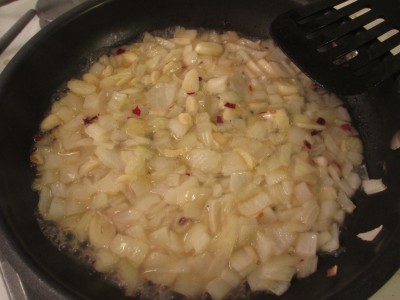
This Vigo Jambalaya rice mix was an easy base for our next ingredient. Brent made that while I prepared the rest. I diced an onion and sauteed it in Earth Balance buttery spread, chardonnay, flake red pepper and garlic.
IMG_2488
We’re using a different kind of vegan shrimp than our usual Ocean’s Best. Visually it was a decent substitute for shrimp.

This particular variety is soy and gluten free and has the texture of overcooked shrimp. I don’t mind that chewier texture, in most dishes I prefer it. It gave a good contrast to the tender rice and soft onion.

At this point I’m neutral to the two. Sophie’s has a slightly better nutritional profile because they’re made with konjac flour instead of potato starch like Ocean’s best. In the end, they’re both tasty, very processed, taste not unlike the real thing but won’t convince most picky carnists. I’d get them if you’re really missing shrimp. Real shrimp are harvested by ocean dredging which is the ecological equivalent of clear cutting a forest. These are better for your conscience.

If you get to try them, let me know what you think!

This is Christie, signing off!

Tagged , , , , , , , , , , , , , , , , , ,

Hedgehog Mushrooms

So these exist. Hedgehog mushrooms were pretty amazing to look at and had a nutty earthy flavor. I wouldn’t go out of your way to find them unless you’re up for an adventure.
IMG_2491
I’m sure you can tell how these mushrooms got their name just by looking at them. If you find some, let me know what you think!

This is Christie, signing off!

Tagged , , ,

Vegan on a Budget

Brent and I have been entertaining the idea of trying a food stamp challenge: that is living on what the average Supplemental Nutrition Assistance Program, or SNAP recipient does. This is partly because rising food costs affect us all and are particularly hard on the most vulnerable among us. We’re also interested in demonstrating that being vegan on a budget isn’t impossible or torturous.

The average food stamp recipient gets just $31.50 per week. I realize how much money that is when I think about my favorite oatmeal costing just a few dollars for a supply that will last several weeks. Add the raisins and agave nectar (that will last a little longer than the oats) and you’ve got a nutritious tasty breakfast for a week, for example. I also realize how little money it is when I think about how much Brent and I can spend at a Starbucks.

We’re planning to present you with receipts and nutritional profiles for our meals. I suspect that meeting nutritional requirements will be the most challenging part but I’m prepared for some creative solutions to these problems. We’ll be following B12 and the intake of zinc most closely (since vegans can have trouble getting these nutrients) but iron, calcium and protein will be among the nutrients we follow (for those skeptical carnists among us). Vitamins C, A and D are easy to get if you eat vegetables and leave your house once a day for a few minutes so we’re not too concerned about those but we’ll be watching them anyways.

We’re curious about what you’d like to see as we undertake this challenge. What should our rules reasonably include? Are fruit from local trees and condiments from take-out fair game as ‘free food’ or should we stick to our budgeted foods? Would supplements be cheating if we can budget them? We want to hear from you because you’re the ones we do all this stuff for.

This is Christie and Brent, signing off!

Tagged , , , , , , , , , , , , ,

The Lazy Vegan: Tandoor Chef Vegetable Masala Burgers

Hi, Veganesers! This isn’t a Lazy Vegan post as much as it’s a “I’m so busy and haven’t had a chance to go to the grocery store let alone cook anything” post. At least it’s not a “I’m curled up on the floor, crying my eyes out for no reason and have no appetite” post.

IMG_9404

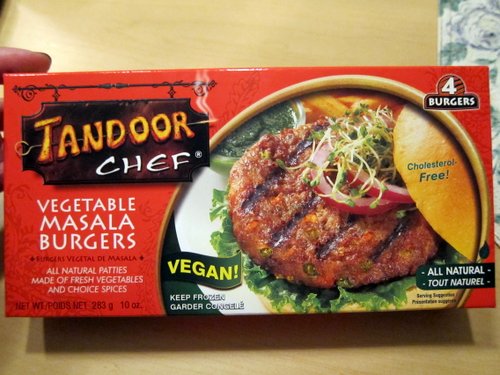
I spotted these Vegetable Masala Burgers by Tandoor Chef at a local grocery store last week and decided to try them. I like veggie burgers, I like Indian food… this seemed like something different that would be perfect for those lazy days.

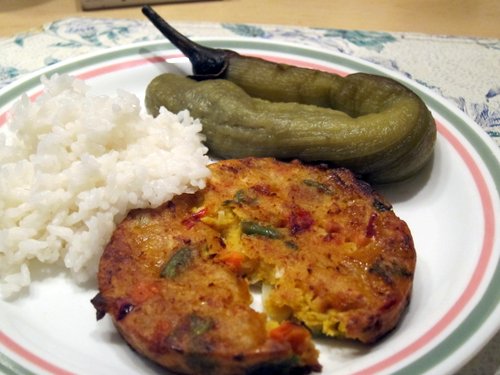
The ingredients include the following: potatoes, canola oil, carrots, green beans, water, bread crumbs, bell peppers, onions, corn, salt, green peppers, milled cane sugar, ginger, cellulose gum, spices, citric acid, tumeric, mustard seeds. They are not gluten-free. I didn’t have any buns (at least not burger buns) so I threw some rice on the plate along with a roasted eggplant.

IMG_9406

The burger was good but far from great. The spices were very subtle so I added some Sriracha to give it a kick. I was happy to see that one patty was only 120 calories, but it only has 2 grams of protein so it’s not very substantial. I’m glad I gave these a try, but I don’t think I’ll be buying them again. They weren’t tasty enough in order for me to prefer them to more protein-packed burgers that I can make or buy.

‘Til next time! –Melissa

Tagged , , , , ,

Chipotle Cheddar Wraps!

A wise soul recently pointed out that you can’t have too many wraps so we’re sharing another one. You’ll need the following:

1 ripe avocado, we’re using Flordida green skin but Haas is perfect too
1 block of silken tofu

1/2 lime

1 tin of chipotle peppers in adobo sauce

spring mix or spinach

Daiya cheddar wedge

1/2 cup dry soy curls per wrap per person

bouillon

flake red pepper and salt to taste

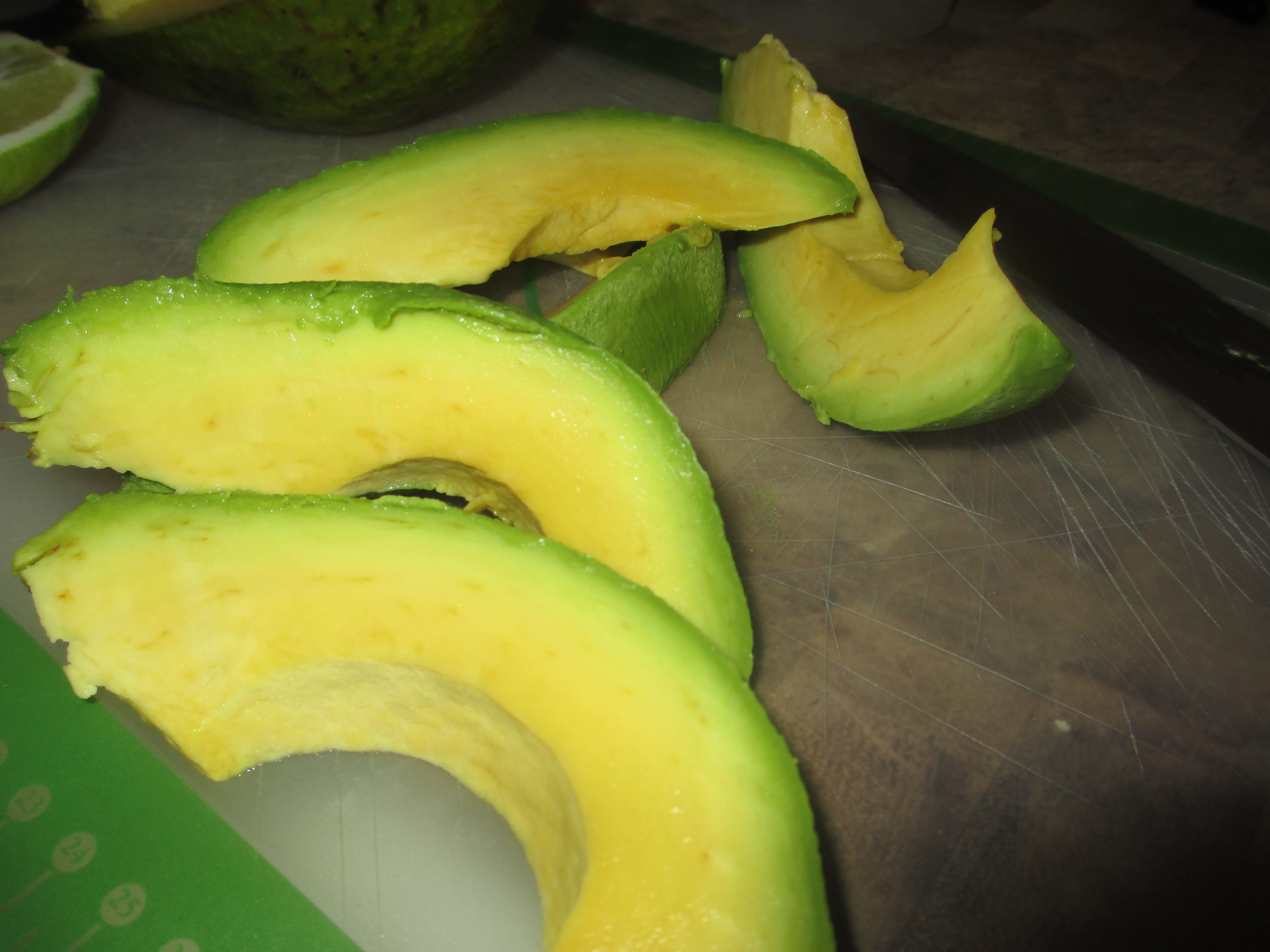
Avocados are beautiful this time of year so they’re going to appear a lot over the next few months. Our avocado tree is also blooming. YES!

IMG_2465
Brent set about making the soy curls according to the package directions using some flake red pepper and a cube of bouillon for seasoning.

IMG_2466

Meanwhile I threw a block of silken tofu into the blender with 3-4 of the chipotle peppers and a spoon full of the liquid from the can, a pinch of salt and the juice from half a lime. I blended it until it was smooth and creamy.

IMG_2468We sliced up the Daiya cheddar and placed it into the wrap along with some soy curls. We microwaved this for 20 seconds to get the cheese melty and soften the wrap. We added the avocado, greens and a generous helping of he creamy chipotle sauce.

IMG_2471

This wrap is AMAZING! We ate it for 2 meals that weekend. If you’re sensitive to soy, use seitan instead of soy curls and cashew cream instead of silken tofu. Let me know if it works out as well as this did. YUM!

This is Brent and Christie, signing off!

Tagged , , , , , , , , , , , , , , ,

Leftover rescue: Veggie Fried Rice!

We ordered some Thai food and were left with huge quantities of leftover rice. I’m not one to waste food so we decided to make it into a delicious meal. Usually we throw all of our leftover veggies into a lasagna but rice gave us a good reason for change.
IMG_2483

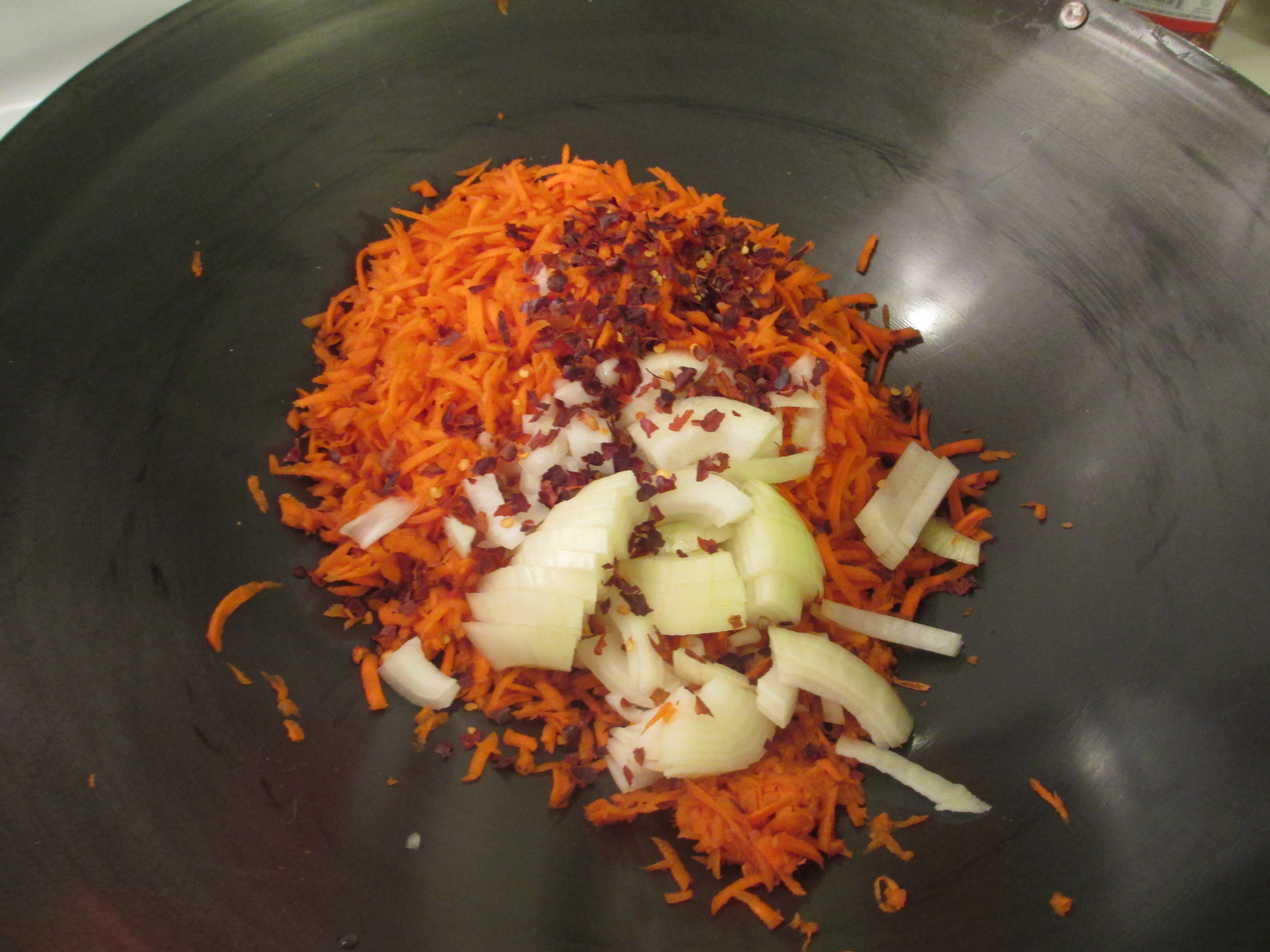
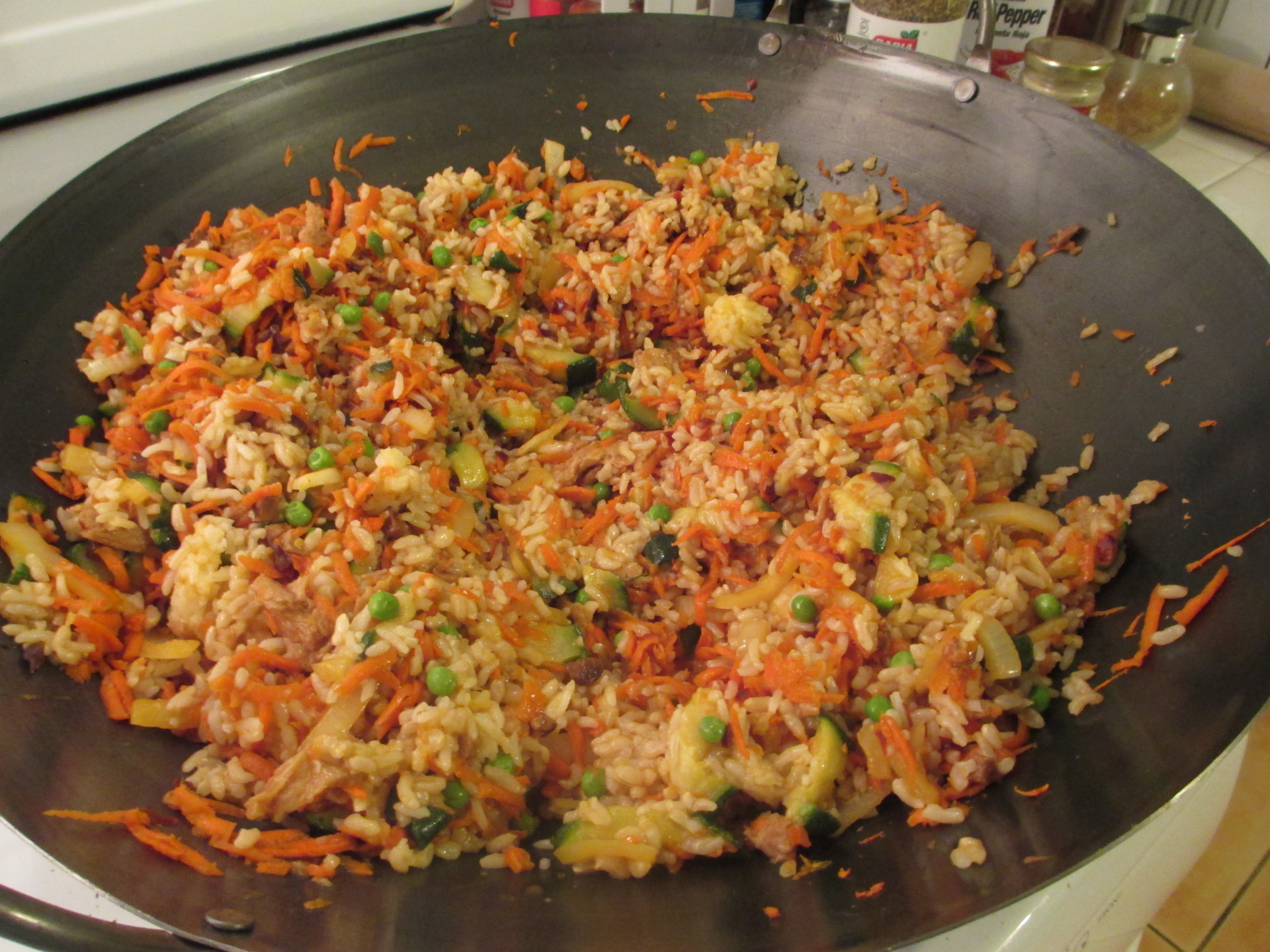
I combined some carrots that we shredded in our food processor with some flake red pepper, chopped onion and a couple of teaspoons of corn oil. I stirred it in our wok (thanks to my big sister for the awesome gift!) until the onion became translucent.
IMG_2484
Then I added some soy curls (use seitan if you’re sensitive to soy) and shitake mushrooms that Brent had reconstituted in our microwave with some bouillon and some frozen peas and julienne zucchini. When that had all gotten hot and steamy and the zucchini was soft.

IMG_2485

Then I dumped in our rice and seasoned it to taste with teryaki and tamari sauce.

IMG_2486

It made a great dinner, leftovers and might benefit from some pseudo-shrimp and sesame seeds when we make it again. It was so easy, I don’t think we’ll be able to resist the urge.

This is Christie and Brent, signing off!

Tagged , , , , , , , , , , , , , , , , , ,

Black Trumpet Mushrooms!

These babies are relatives of another subtler favorite, the chanterelle. They’re similar in shape but they’ve got a richer flavor and beautiful smoky color. These hail from the Pacific Northwest and I left the gathering to the professionals this time. Wild mushrooms are something you should only partake in if they’re gathered by someone who really knows what they’re doing.

IMG_2481

These were beautiful when sauteed with some vegan butter and garlic salt. In a wrap or over pasta they made a nice meaty addition to my dinner.

This is Christie, signing off!
Tagged , , , , , , , ,

Resistance Was Futile

Hello, Veganesers! I’m finally back from my trip to Europe. It was a good time. I saw a lot of sites, mastered foreign public transportation systems, walked in the cold and rain, and conversed awkwardly with the locals. I also ate a lot. And I’m sorry to report that I pretty much failed at staying vegan.

After a successfully vegan voyage across the Atlantic, I was very optimistic about my food choices. I traveled with a large group. Our breakfasts and dinners were included in the travel package. It was only lunch that we needed to (or, really, that we could) get on our own. I was expecting buffet style dinners and breakfasts, so I was ready to load up on fruits and veggies and toast with jam and salad and rice and potatoes. I packed a bunch of protein bars to eat during the day so that I wouldn’t have to depend on whatever our lunch choices were.

I wasn’t prepared when I realized that we had a sit-down service for dinner every night. If the hotel didn’t know in advance that there was a vegetarian in the group (there were actually two of us and explaining that I didn’t eat meat was confusing enough so I didn’t say “vegan”), then we had to settle for whatever meal was being served. Luckily, this only happened on two occasions.

The meals usually started with soup; I think it started with a salad on just one night. The soups were usually a vegetable soup, but I can’t say they were vegan. The entree was chicken, beef, or pork served with fries or rice or potatoes and veggies like broccoli. On the nights when I didn’t get my “special” meal, I gave my meat to someone else in the group and ate the rest. And then I had a protein bar in my hotel room.

It was really interesting to discover what “vegetarian” meant wherever we went. In Portugal and Spain, I was served mushroom omelettes with veggies on the side. Luckily, there were plenty of mushrooms so I just picked them out of the egg. In France… sigh… I was given fish. Fish with a side of creamy rice one night and fish with a side of green beans the next night. It was hard to be disappointed when the servers were so proudly serving me my “vegetarian” dish. I could have skipped the fish, but I didn’t for two reasons. One, I was really hungry by the time dinner rolled around, especially after all the walking we did everyday. Two, it bothered me that a lot of people complained or left their food uneaten if they didn’t like it and, while I don’t really eat fish anymore, I felt really guilty throwing it out. (Also, it was kind of delicious. I know, I know, I’m a horrible vegan. I can only eat so many vegan snack bars before I want to hurl.)

There were small victories. We did have a buffet dinner one night, and I was able to eat a ton of salad with yummy fresh veggies along with a ton of yummy artichokes. A lot of the hotels served mushrooms in the morning, so I was able to load up on something warm and delicious and nutritious. I was able to get vegetable soup or other veggie dishes for lunch, like pasta or veggie paella. And on a cold day in Paris, I resisted the urge to get French onion soup and got a salad instead. The arugula was soooo good.

The plane ride back home offered a nice dose of getting back to my vegan diet. I was too tired to take photos, but I got a nice and tasty pasta arrabbiata with a side of veggies in a vinaigrette dressing and fresh fruit for dessert. I was again glad to hear that a vegetarian option was offered to everyone else, but this time it was an Indian dish with paneer that I would not have been able to resist. Then, for snack time, I got a triple decker sandwich with fresh cucumbers and red pepper on this really tasty brown bread. I was happy with that.

I’m confident that I would have been more successful at staying vegan had most of my meals not been included with the travel package. I did pay for it, after all. Unfortunately, we were on the road a lot and in remote locations for most of the trip, so a walk to a nearby market or restaurant wasn’t possible. We even went to a small spot that had a grilled ham and cheese sandwich on the menu, and they wouldn’t make it without the ham. I do consider it a victory that I avoided meat. It wasn’t easy since everyone around me was eating it and it all smelled so good.

I would love to go back to Europe for obvious reasons but also because I would like to have an opportunity to seek out vegetarian and vegan places. Our tour guide was very passionate about saying that there are no vegetarian restaurants and everyone eats meat, which of course cannot be true. The trip also demonstrated to me that “vegetarian” has a different meaning depending on where you are and “vegan” is still a totally new concept.

Looks like we’ve got a lot to teach the world, you guys! And I better start by being a real vegan myself. –Melissa

Tagged , , , , ,

Vegan Paella, for real this time

I made paella once before and a Latina colleague informed me that unless it contains meat, paella is merely veggie rice. I don’t think she’d be able to argue with this vegan paella, though.

We used Vigo yellow rice instead of making our own. Brent and I have become big fans of this vegan rice mix because it’s tasty, easy and costs less than $2. If you get to try it, it gets a little toasty on the bottom of the pan and don’t worry because this improves the flavor significantly.
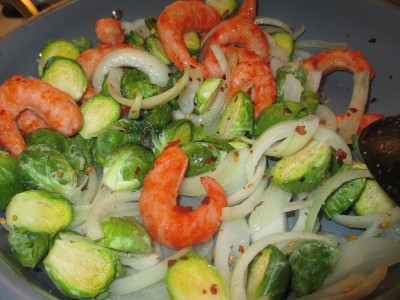
IMG_2441I started by sauteeing some onion with a little olive oil and some flake red pepper. While that was cooking, Brent was cutting some Brussel’s sprouts and thaw the Ocean’s Best vegan shrimp.We also threw in some black olives that I cut in half.

IMG_2443

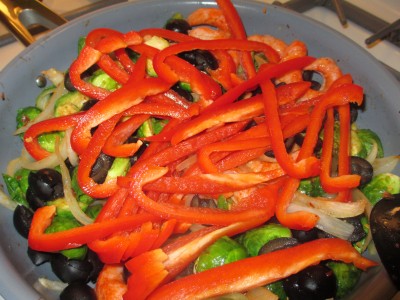
These all went into the pan until everything was steamy and hot and the onion was soft and the sprouts had begun to soften. I turned off the heat and added the red pepper. I put a lid over it and allowed it to steam until the pepper was just barely hot. I find bell peppers get bitter when cooked so I avoid cooking them completely unless the skin has been removed.
IMG_2445
We scooped some rice onto our plates and arranged the veggies to make the paella look delicious and that didn’t take much effort. It was really good and the shrimp definitely added what was missing from my last paella effort. Next time I might add daikon as an answer to sea scallops. Savory olives (instead of mussels), sweet bell pepper, herbal Brussel’s sprouts all brought out the light flavors in the saffron rice and sweet shrimp. YUM!

This is Brent and Christie, signing off!

Tagged , , , , , , , , , , , , , , , ,