Author Archives: Kinenchen

Adventures in Fruit: Longan!

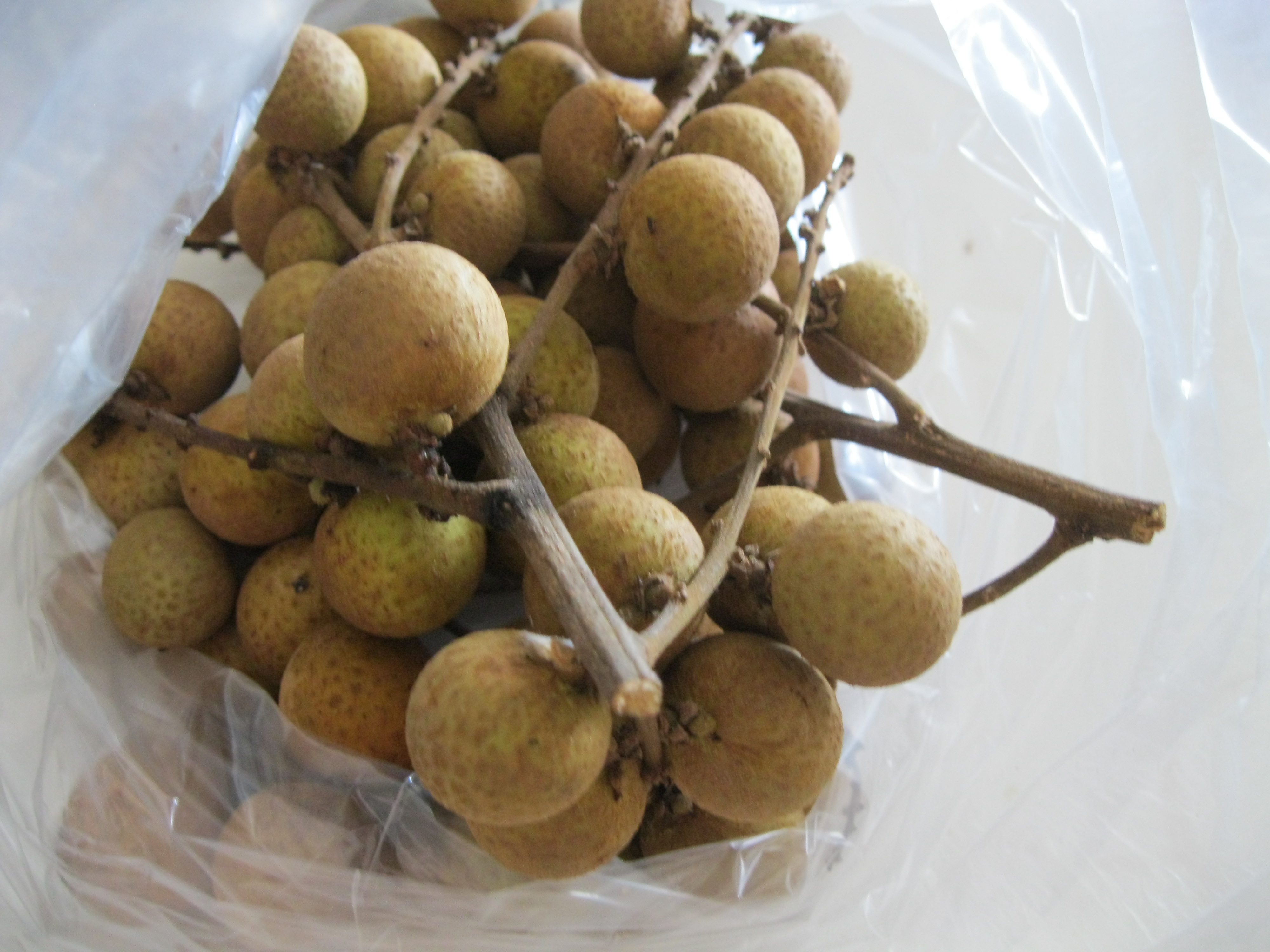
If you’re a fan of lychee, you’ll love longan. These fruits are similar to lychee and unmistakeable as a unique fruit.

They’ve got smooth papery skin (reminds me of a brown paper bag), translucent flesh and have a soft honeyed mineral flavor and one of my favorite fragrances. The seed inside is hard and glossy brown. I don’t think you can eat that part…

They’re kind of awesome in martinis or on their own! I hope you get to try some!

This is Christie, signing off!

Tagged ,

Apple Tempeh and Mozzarella Sammiches!

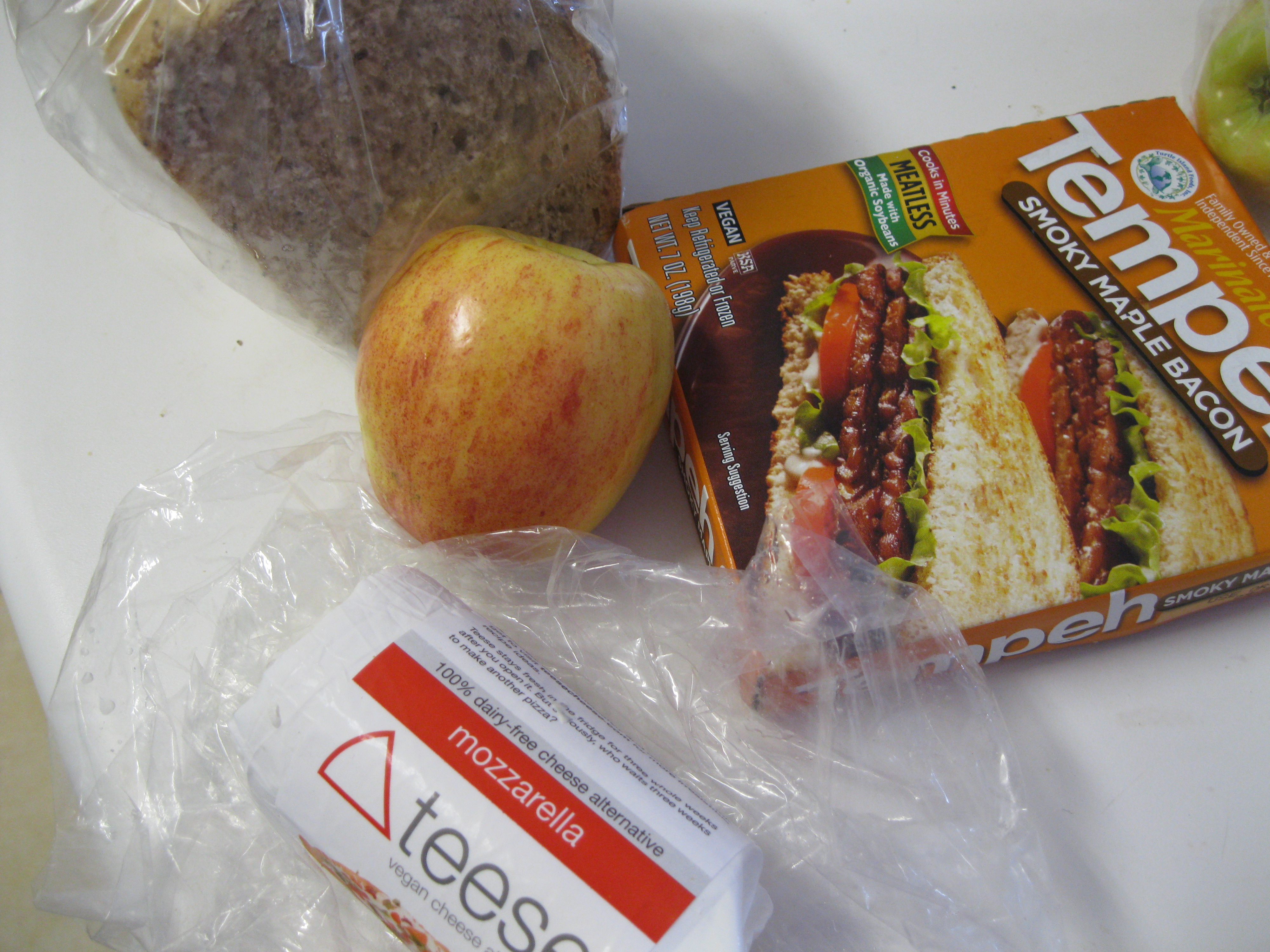
This was a really easy meal on a night when we were exhausted. The suggestion came from a friend (THANK YOU!) and it was definitely worth it.

We browned some smoky maple tempeh while some multi-grain bread topped with teese mozzarella. This is bread that a local lady makes for us, gluten-free and vegan. She’s an incredible baker and I hope all of you who aren’t expert bakers and a few who cartinly are(I’m looking at you) can find vegan [gluten-free] bread that doesn’t taste like it’s been frozen between 2 pieces of cardboard in a diesel truck for 2 years. Well, that’s my opinion of most store bought bread. On to noms!

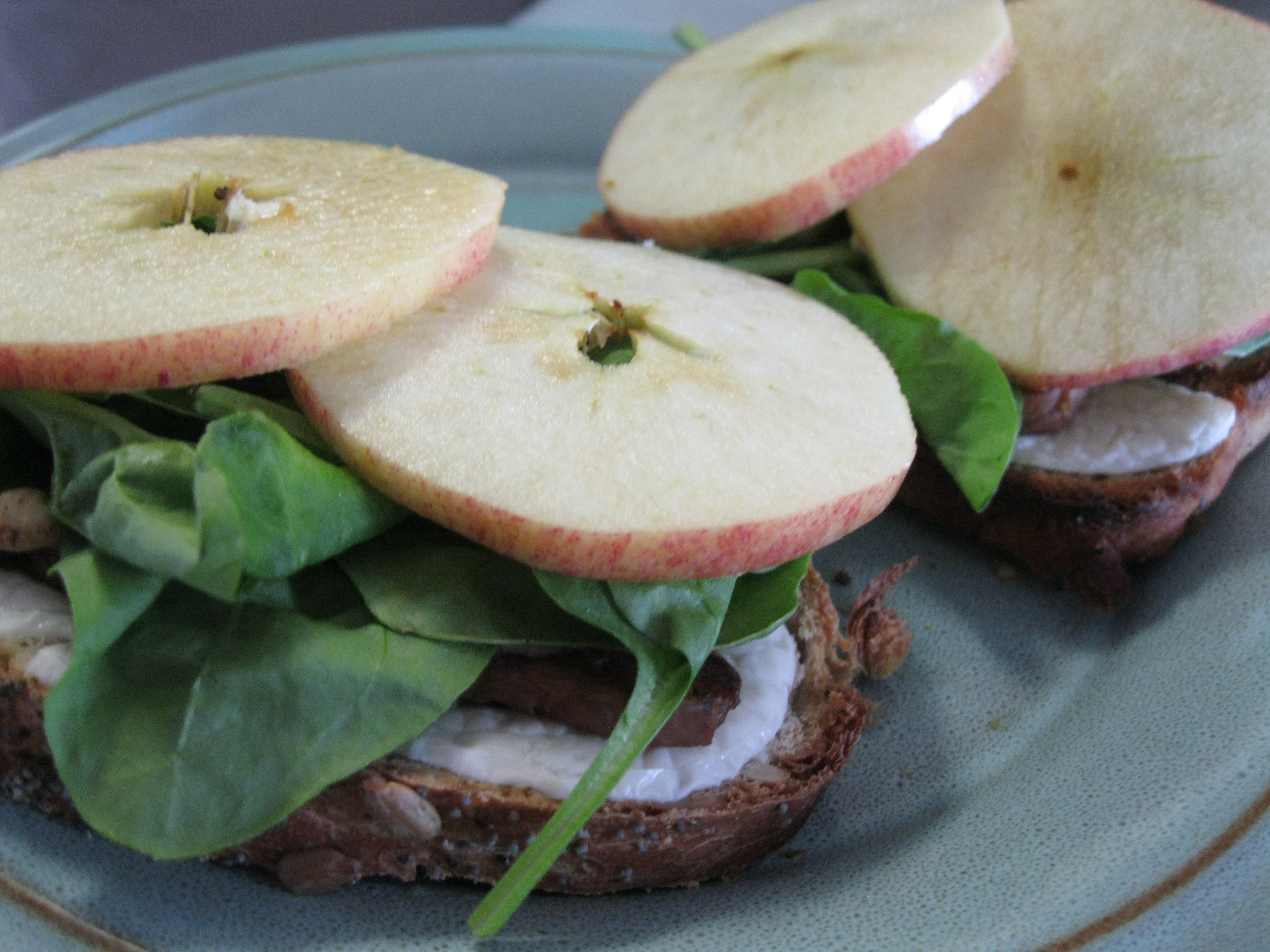
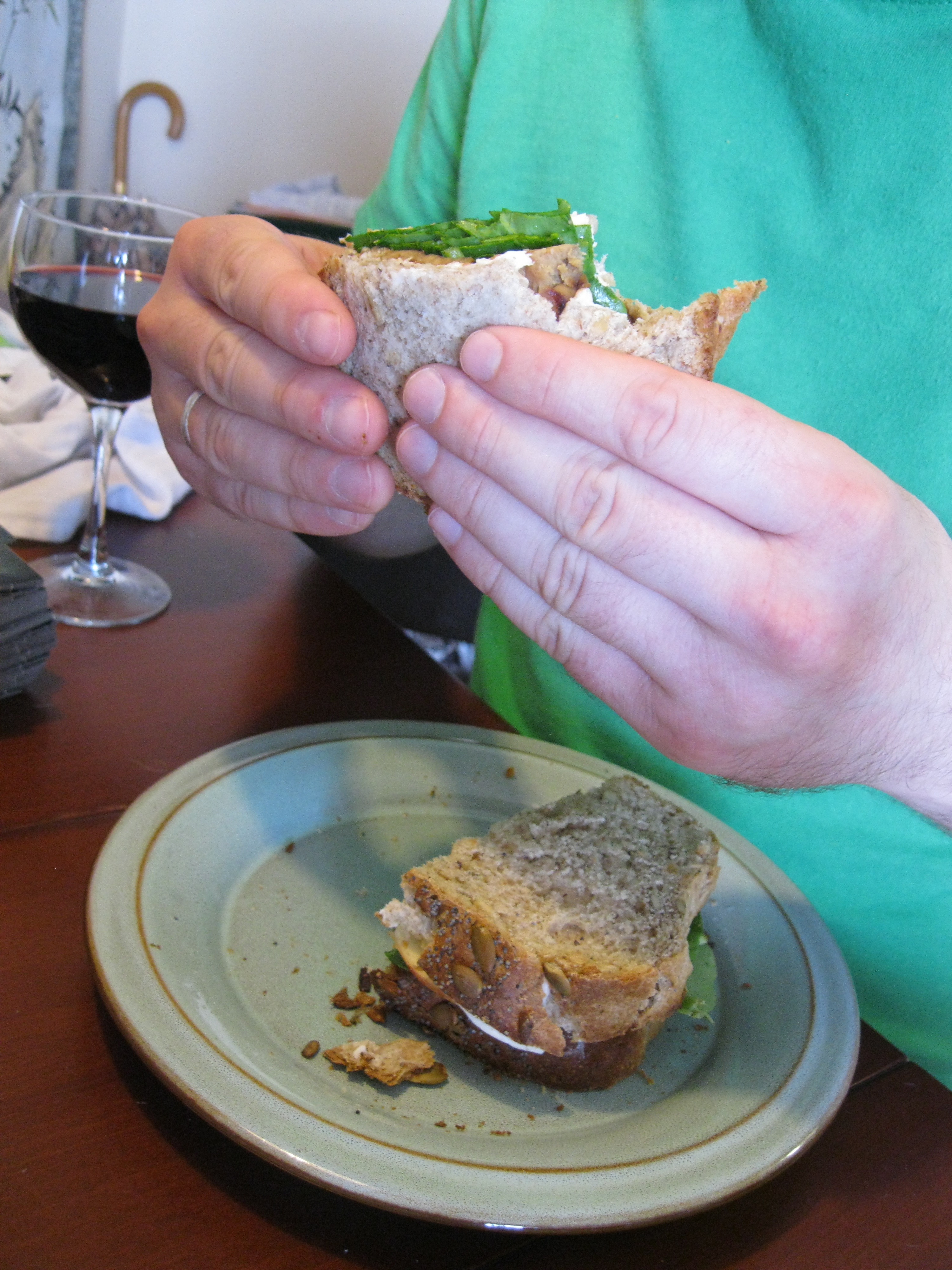
We stacked the tempeh on the bread with some spinach and apple slices. I like royal gala apples. They’ve got a buttery mellow flavor that isn’t too acidic. We use them to juice too!I like my sammies open faced (above) but Brent is more traditional (below).

Mustard is important to me when I make this particular sandwich (but back in the day it was with turkey and soft cheese. Ew.). I think the spiciness brings out the flavors in the tempeh, spinach and apple. The mozzarella is just awesome and I want to take it on a date.

Don’t tell Brent he’s got competition from non-dairy cheese or the sammies will end up… oh… yeah, he’ll eat it all. Yay!

This is Christie, signing off!

Tagged , , , , , , , , , , , , , , , ,

Double Cherry, Almond and Long Bean Salad!

Melissa brought us some GORGEOUS long beans from her Dad’s garden. Green beans are easier to find in your supermarket but long beans have a subtly sweeter flavor. Here she is below, breaking off the ends and snapping them into bite sized pieces.

We used the following:

3-4 cups of long beans, ends trimmed and cut

1 carton of cherry tomatoes, cut in half

1/4 cup of dried cherries (dried cranberries work too!)

15-20 toasted salted almonds, crushed

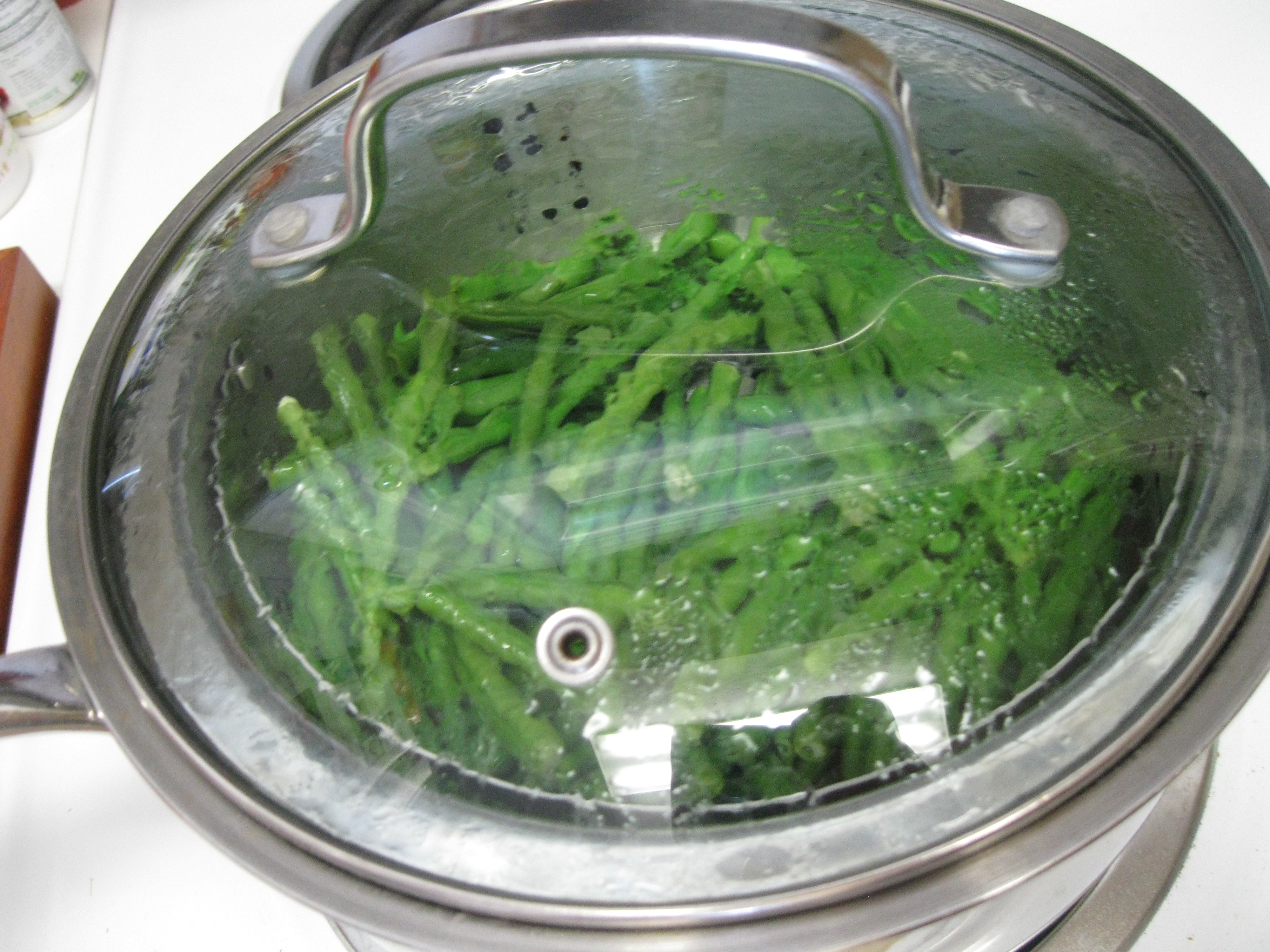
Melissa blanched the beans by steaming them.

I tossed together the fruits and veggies and dressed it with 3 tablespoons of balsamic vinegar that I whisked together with a tablespoon of Dijon mustard.

This salad disappeared fast: sweet fruits and veggies, savory nutty almonds and tart dressing. The textures were contrasting and very welcome and this is a light filling salad that’s beautiful to boot! We hope you get to try it.

This is Melissa, Christie and Brent, signing off!

Tagged , , , , , , , , , , , , , , , , ,

Minty Banana Colada!

Summer is definitely a time for frosty summery drinks and this is definitely a frosty summer drink. We combined the following in the blender:

1 frozen banana

1 tbsp shredded coconut

1 cup of coconut cream or coconut milk

1 tsp coconut sugar (more or less depending on your taste)

1/2 cup fresh mint leaves

1.5 cups of ice

1.5 cups almond milk

1/2-1 cup of rum (optional)

Blend this up to creamy perfection. Garnish with more mint. Share with friends!

This is Brent, Christie and Melissa, signing off!

Tagged , , , , , , , , , , , ,

Is “GMO” a bad word?

Apologies in advance, this isn’t a simple issue so I have to make a lengthier post than you’re probably used to here on Turning Veganese. Also, please don’t hesitate to ask me questions. I have trouble talking like a normal person because I spend most of my time with other eggheads so I understand if more explanation is needed. Genetically modified organisms or GMOs are often a hot topic in news reports and nutrition bulletins, and I want to give you the perspective of a scientist.

A GMO is any organism whose genes have been altered in a laboratory. Genes are passed back and forth between organisms in nature often enough that there are dedicated natural mechanisms to promote and facilitate gene transfer. Scientists have harnessed these mechanisms as tools for understanding and interacting with the world around us. The intent behind each genetically engineered product is colored by the perspective of the engineer. My point is that, genetic engineering isn’t necessarily bad.
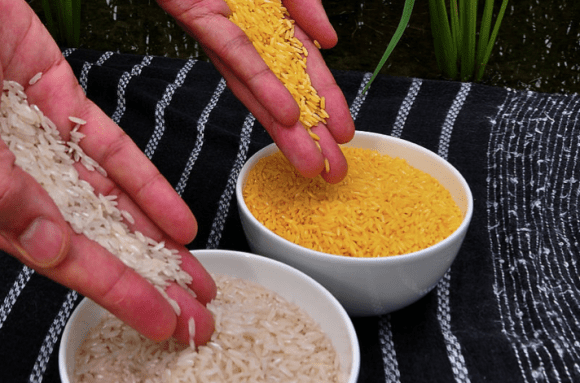
Golden rice is an example of a GMO created in 2000 as a humanitarian tool. Above is regular polished rice next to golden rice. Golden rice was engineered to contain beta caroteine which is a precursor to vitamin A. Vitamin A deficiency is the culprit for 1-2 million deaths annually, 500,000 cases of irreversible blindness and millions of cases of xeropthalmia (that means “without tear ducts”) in countries where dietary vitamin A is scarce. Golden rice has the capability to end the horrors of this tragic and preventable vitamin deficiency cheaply. Golden rice has been distributed and hybridized with local varieties to maintain genetic diversity (which I’ll talk more about shortly).  Several of the researchers who developed this boon to impoverished earthlings went on to work at big agriculture and chemical corporations which takes me to a criticism of a GMO crop.

Genetic use restriction technology (GURT) is a seed that will either produce sterile offspring or must be sprayed with a chemical sold by the company that created the GURT plant in order to activate the engineered properties of the plant. Many farmers, particularly in poorer countries save some of their seeds from each crop to plant next year. This means that farmers who buy this plant can’t save seeds (which also stifles diversity; don’t worry, I’m getting to it); they either have to buy more seeds from the company or buy more chemicals. I would compare it to drug dealing where seeds are methamphetamines and withdrawal is almost as disillusioning as being high. Still GURT is just one example of how GMOs can be bad, not a broad statement about genetic engineering, so I’m going to cover some of the shades of grey involved in genetic engineering.
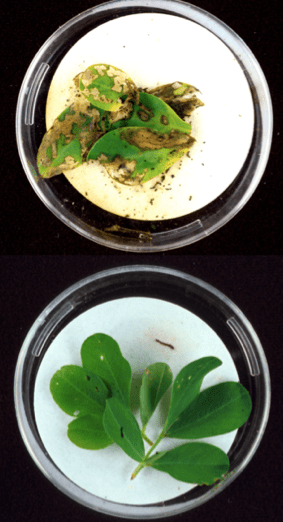
The most common and most desirable mutations are ones that allow crops to survive adverse environmental conditions like frost or drought and ones that prevent them from being susceptible to pesticides, herbicides and fungicides. It really depends on the individual gene that confers these advantages as to whether I can have an opinion on whether they’re good and bad in the context of our bodies. The next obvious issue is whether or not they’re doused with poisons. If there isn’t an alternative I would buy a GMO product that was grown organically versus a non-GMO that was grown conventionally. For example, the picture to the right has a wild type peanut plant (above) and an engineered peanut plant (below) grown without pesticides. The modified one appears healthy and untouched and the wild type is looking gnarly. This particular plant is producing a natural toxin from a soil microbe, Bacillus thurongensis. This particular toxin affects insects by binding to part of the insect’s gut. People just don’t have that part so it doesn’t affect humans, kind of like how antibiotics hurt bacteria but not people (though some people have allergy responses to some antibiotics).  For decades the toxin itself was isolated from the bacterium and sprayed on crops. The issue was that it then washed into the water supply affecting insects other than those targeted by farmers. Putting the gene in the crop meant that only insects that fed on the crop were affected which good because fewer chemicals and less work would be needed to grow the crop but there’s also something not necessarily dangerous but also “not peanut” in it. So, yes. I might buy these GMO peanuts if they were grown organically. Still, I favor organic and non-GMO.

On the other hand, there’s RoundUp Ready soybeans and other crops. These babies are engineered to be resistant to glyphosate. Glyphosate is a highly toxic chemical that’s capable of killing animals, fish, birds and pretty much anything else, including weeds (above). RoundUp Ready crops can be sprayed liberally with this chemical and survive. This would be great except that some of the chemical stays in the crop that eventually people eat. Even in small doses it’s known to be a teratogen (causes birth defects) and carcinogen. Still, I might buy RoundUp Ready crops that had been grown organically because it’s the pesticide that’s an issue, not the genetic modification.
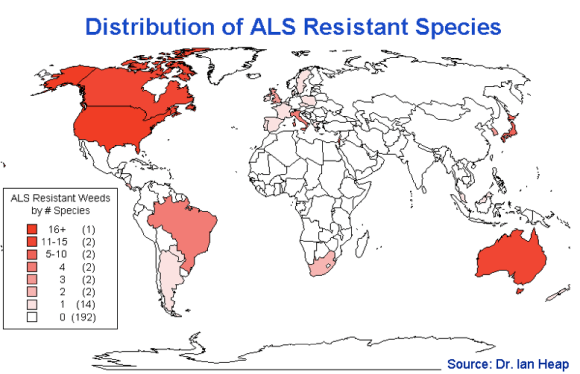
Nature also has a leg up on us and a dry sense of humor. Above is a map of the distribution of weeds that are now resistant to glyphosate, undermining the appeal and advantages of RoundUp Ready crops. Coincidentally the reddest areas are also are the places where RoundUp Ready crops are most frequently planted. As I noted earlier, nature has mechanisms that allow the very genes we manipulated in the laboratory to be exchanged between related organisms as well as the simple elegant process of evolution in its formidable arsenal. If there’s anything I’ve learned as a scientist and farmer it’s that you can’t beat nature; you can only try to work with it.
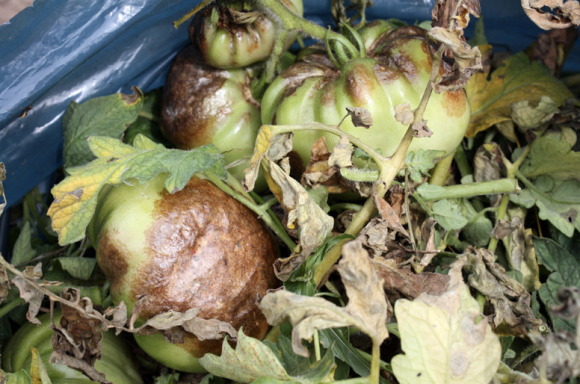
Now on to my reasons for favoring non-GMO foods. Genetic diversity is important. Often when a crop or livestock is genetically engineered, they all have identical genes. This is important because things that have identical genes have identical susceptibility to disease or adverse environmental conditions. Genetic variation is how some organisms survive while others perish. Humans often plant huge fields with the same crop. This makes fields like big cities where a common cold spreads rapidly because people are in close proximity with one another and can spread disease. Of course some people just don’t get sick. This might be genetic, chance or maybe they’re just healthier. When we engineer crops, we can take away the opportunity for plants to rely on genetic diversity to fight disease.  The icky looking photo [above] is an early image from the 2009 late blight that ravaged tomato and potato crops in the Northeast. I’ve never seen anything like it. I watched entire greenhouses go from emerald green leaves and bursting with beautiful plump tomatoes to steaming heaps of putrid grey mush in only 3 days. THREE DAYS!

Reliance on one major crop in combination with a late blight was what caused the Irish potato famine between 1845 and 1842 and after seeing it in action, I understand why it was so devastating. If you’re not familiar with that example, consider what happens when when an entire crop of soybeans or corn or other staple is destroyed: food prices skyrocket, farmers lose their livelihoods, people starve to death. The most vulnerable people would be the most severely affected: the poor, elderly and children. This is actually my biggest reason for avoiding GMO foods: to preserve the genetic diversity that’s only possible when seeds are hybridized, harvested and saved by farmers instead of cloned by big corporations. I can’t make any other sweeping statements about abuses of the technology.

So to conclude, it’s more nuanced than “GMO good” or “GMO bad”. Sorry folks, it might not be the concrete answer you wanted but hopefully you learned something. I can still offer this word of wisdom: buying organic shows reverence for the earth in it’s entirety. It made you. Recognize.

This is Christie, signing off.
Tagged , , , , , , , , , , , , , , , ,

Lazy Vegan: Vegan French Toast

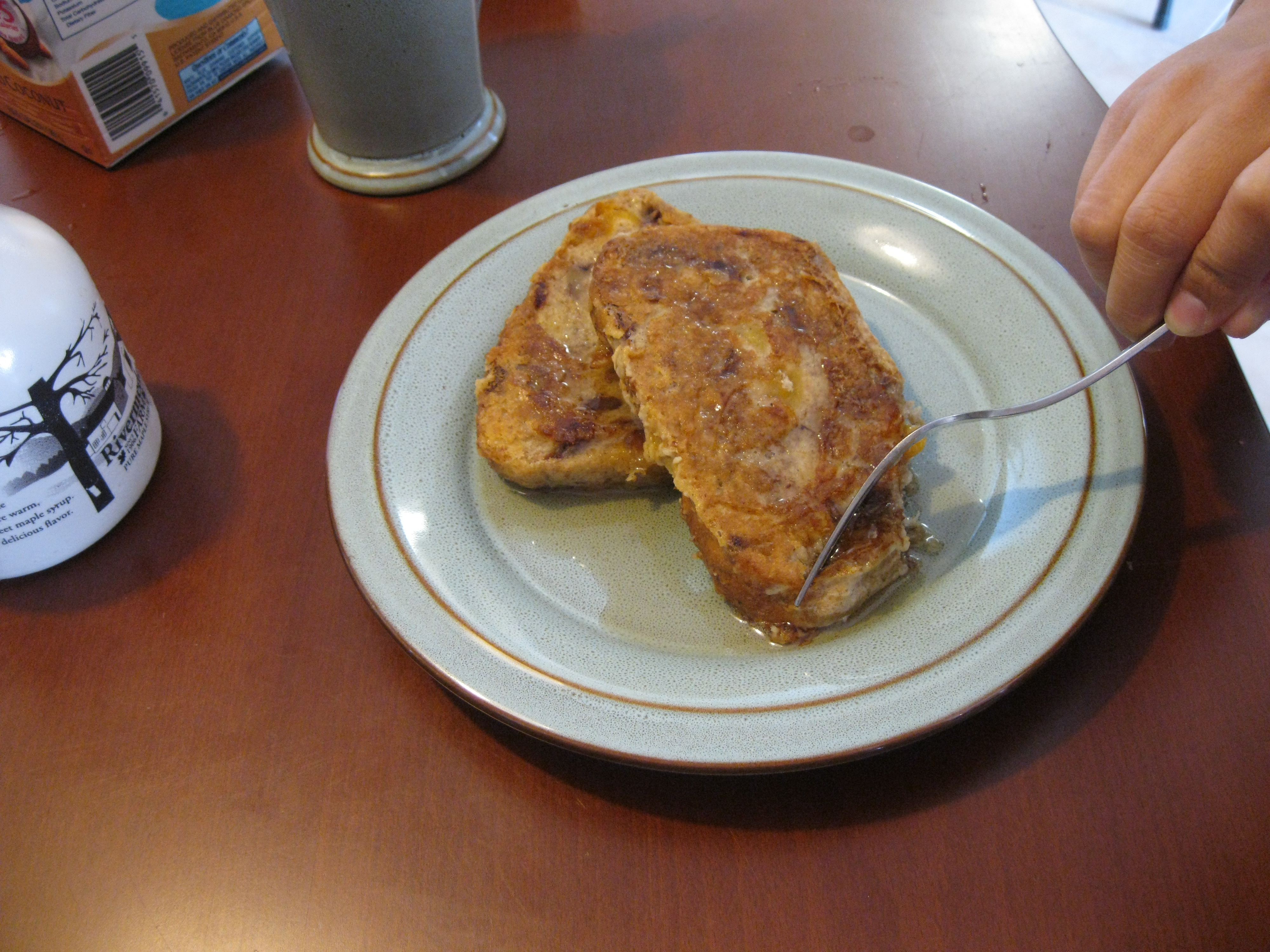
For a lazy Saturday with friends, there’s nothing like French toast. Our local baker, Karin, makes spelt müseli bread that’s got almost as much fruit in it as whole grain and that’s basically a dog whistle for vegans like me. I used a product called Mom’s Vegan Kitchen French toast mix along with some almond coconut mix.

I found this product straightforward and easy to prepare. I combined the mix with almond milk and grapeseed oil as recommended on the package and soaked sliced bread in it.

In the pan it created an egg-like film on the surface of the bread and had a beautiful toasted look and smelled DIVINE. It didn’t have the bitterness of dairy milk or the sulfur flavor and odor of egg but all the other delightful flavors you’ll find in French toast.

We topped it with Rivermede farm maple syrup (above) alone and with frozen wild blueberries (below).

It was all delicious. I would definitely buy this product again. I don’t know any carnists that would turn this down either. This is a perfect comfort food for when you’re feeling a little lazy but want something decadent. We bought this for just under $6 which I thought was very reasonable for what you get at Vegan Essentials. This website was instrumental when I first became vegan and I totally recommend them. They research all of their products so you know it’s vegan and they are independently owned. I’m about to mow down some more French toast.

This is Melissa, Brent and Christie, signing off!

Tagged , , , , , , , , , ,

Panang Curry!

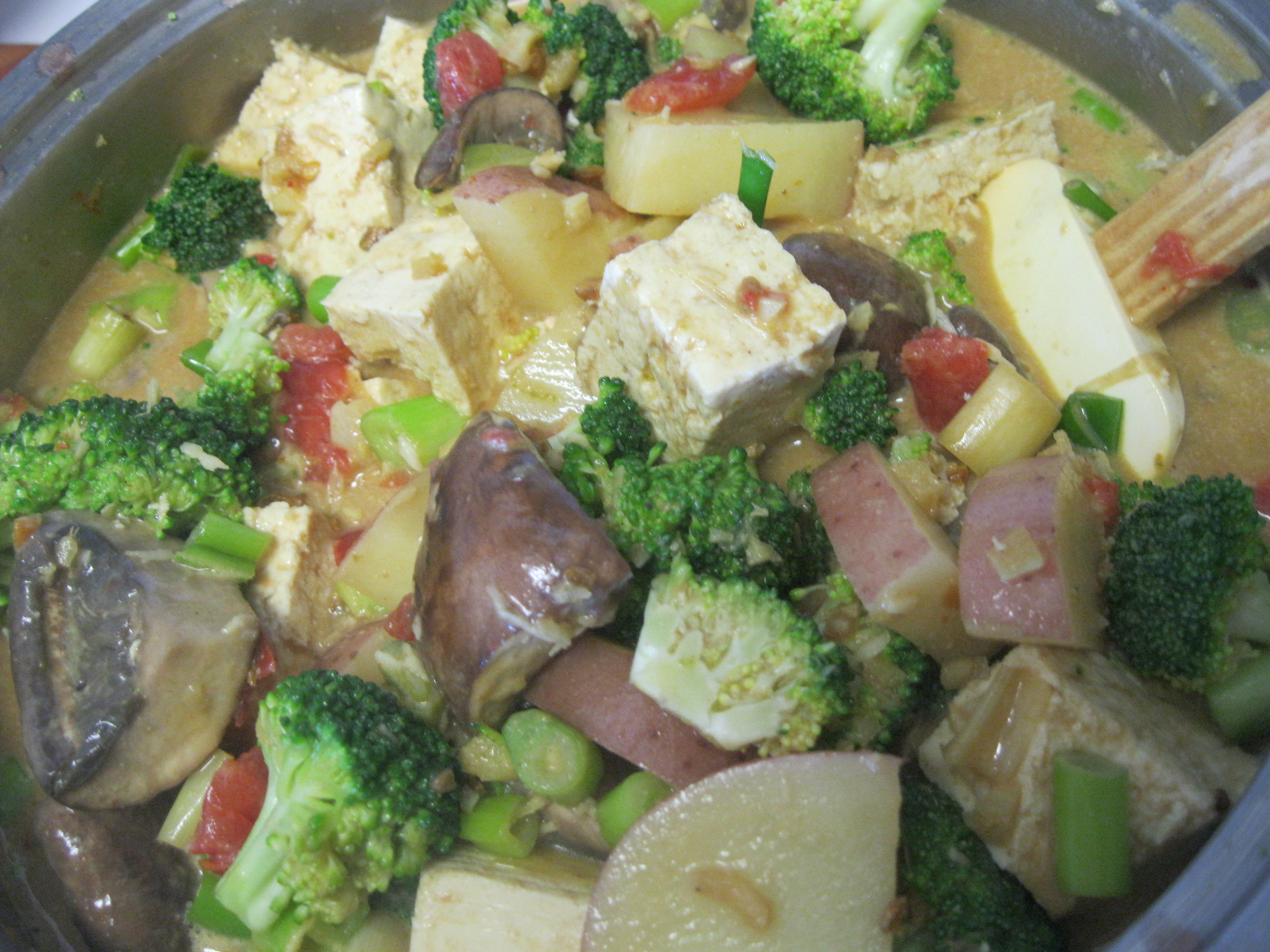
Curry is kind of awesome. This is a rich veggie curry rich with veggies. Is that redundant? Anyways, we like curry and will eat it whenever we get the chance so this is an easier version you can make if you’ve got a fridge full of veggies like we often do. You’ll need the following:

1.5 tbsp olive oil
1/2 cup chopped shallots/green onions
2 tablespoons minced ginger OR 1/2 tbsp powdered
4 garlic cloves, minced
2 generous tablespoons of peanut butter
1 finger sized piece of turmeric OR 2 tsp powdered
1/2 teaspoon ground cumin
1 teaspoon Thai red curry paste or to taste
1 cup water
1 can of coconut milk (2 cups of almond milk for a lighter version, just add 2 tablespoons of shredded coconut for flavor)
juice and zest from 1 lime

1 tomato, diced
2 tablespoons turbinado sugar or molasses or to taste
1 14-ounce package firm tofu, drained, cut into cubes (optional)
1 sweet potato or white potato, cubed
1 bunch green veg, ripped or cut into bite size pieces (I used broccoli and a green bell pepper because I had them but kale works well too)

salt to taste

You can also add mushrooms, sliced carrots, or other veggies
1/2 cup roasted and salted cashews or peanuts (or cilantro for a lighter version) for a garnish


Heat oil in large pan over medium-high heat. Cook shallots, ginger, turmeric and garlic until tender. Stir in the cumin and curry paste until fragrant. We like ours spicy so I added some red peppers.

Whisk in water, coconut milk, lime juice and zest, and brown sugar and let simmer. Season to taste with salt and adjust the seasonings.

Add tofu, potato and mushrooms if you’re using them and let cook on low heat covered for 20 minutes, or until the potato begins to soften. Then add the green veggies and cook until you like the texture.

Garnish with cashews/peanuts/cilantro and serve as is or with rice or quinoa. Using almond milk instead of coconut milk makes  a huge dent in the number of calories added from fat (even compared with light coconut milk) and makes the flavors more intense. We hope you get to try it!

This is Christie and Brent, signing off!

Tagged , , , , , , , , , , , , , , , , , , , , , , , , , , ,

I Love Freeze-For-Whenever Olive Black-eyed Pea Burgers!

I’ve been battling mooshy burgers since I started making vegan burgers. I’ve found that if they’re firm enough, they’re often too dry. If they’re moist enough, they moosh out the side of your bun. What is a girl to do?

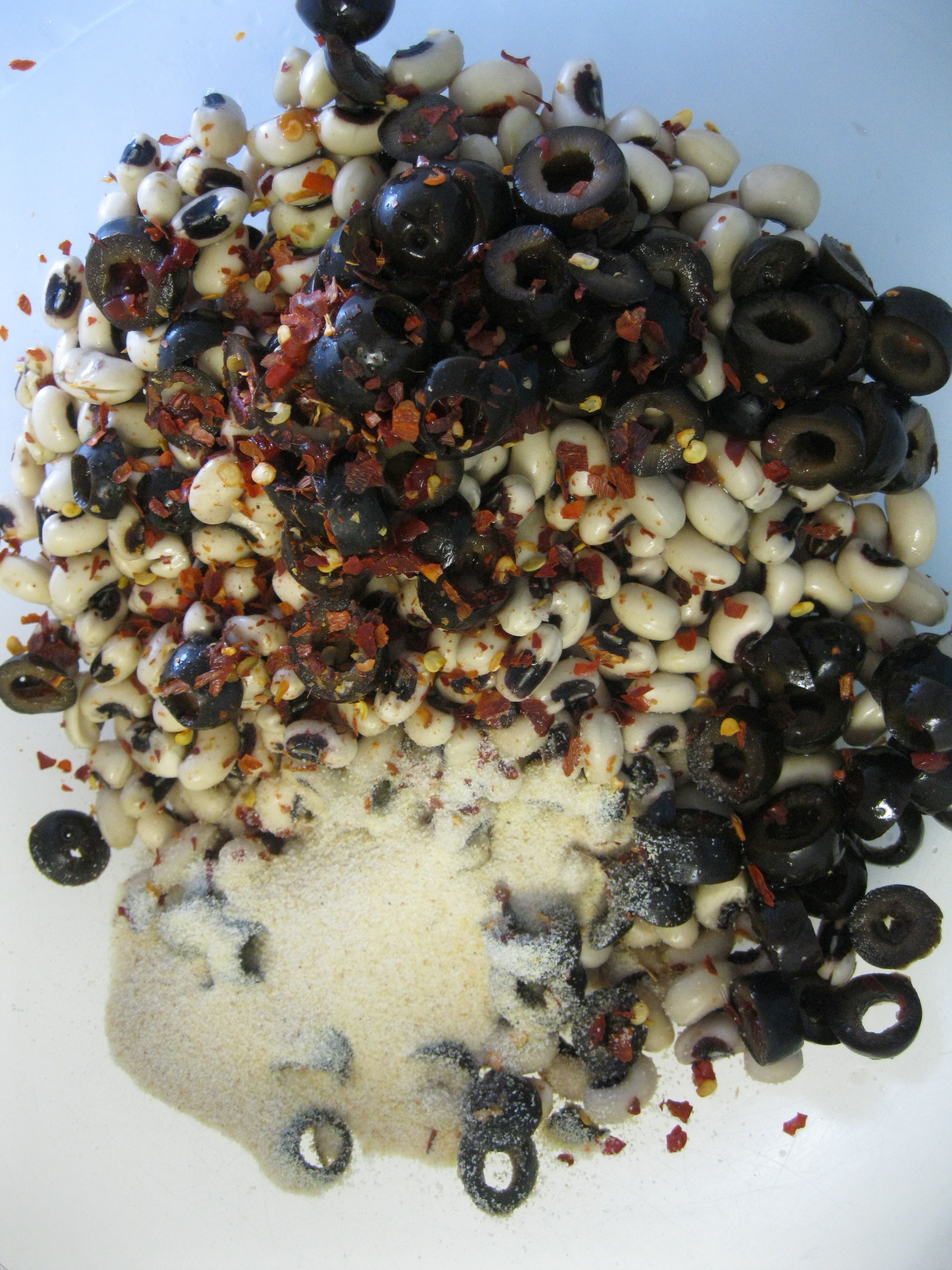
I decided to experiment with making frozen patties because it seems to work so well for all those store bought brands. I assembled the following:

1 cup of black-eyed peas, soaked OR 1 can of black-eyed peas, drained and rinsed

1/4 cup of sliced olives

1/4 cup of mushrooms, chopped (optional)

1/4 onion, chopped

1/4 cup bread crumbs (I chopped some gluten-free bread in my food processor)

1 tbsp onion salt

1 tsp garlic salt

2 tbsp cumin

1 tbsp coriander

2 tbsp corn oil

red pepper flakes and salt to taste

If you’re using dried beans, take a moment to microwave them in water 3-4 times at 2 minute intervals to soften them slightly. We put all the ingredients into a bowl and I set my expert moosher (that’s Brent) to power moosh. It wasn’t long before it was looking and smelling like burger material so I started scooping the mixture into some plastic freezer safe containers.

I made sure that the patties were compacted and of a relatively uniform thickness, about 1/2-3/4 inch. I put a piece of plastic wrap over it and then used the next one to help compact the burger. I put them in the freezer until I was ready to use them.

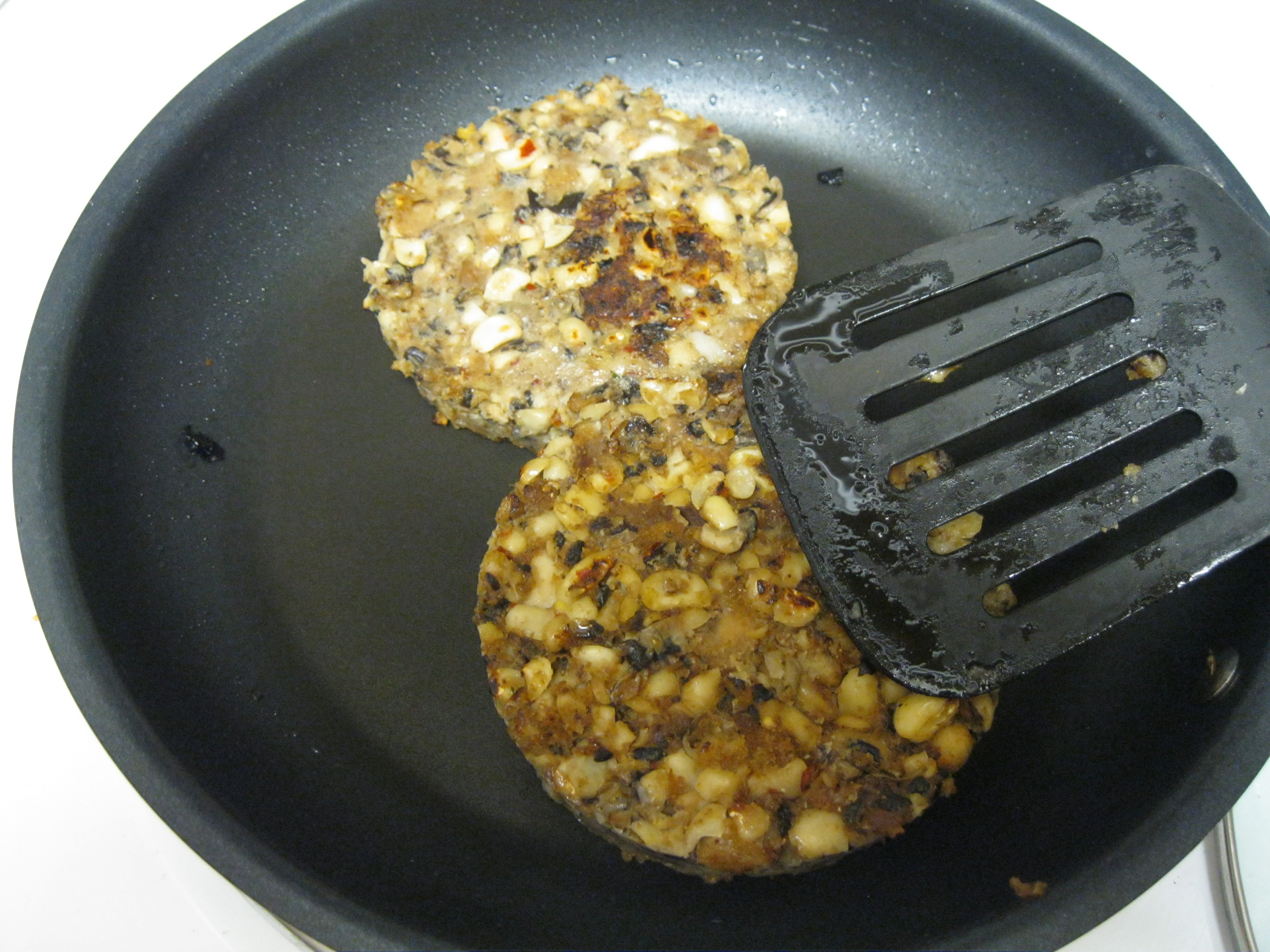
These were actually some of the best burgers Brent and I have prepared. They were moist and held together and had a pleasing dense texture. They tasted enough like ground beef to be a little disturbing. I have no desire to eat cows!

I am going to take a moment to discuss why ground beef isn’t so great for your body. The obvious stuff aside (cholesterol, saturated fat, hormones and antibiotics) cooking beef or any meat is a tricky business. Preparing meat for food means balancing microbial contaminants with carcinogenic compounds that are formed when meat is cooked. Big agribusiness has made the case that they cannot ‘efficiently’ process large volumes of animals without some inherent contamination by the animals’ feces. This means that if you buy meat, it’s got poop on it and the law says that’s okay. They cover their butts (pardon my language) by saying, “Cook it thoroughly.” Which translates to, “If you get sick it’s your fault for not cooking it thoroughly.” Try telling that to the hundreds of thousands of people that get some form of food poisoning or another every year from eating meat.

So fine, meat is ‘safe’ if you cook it thoroughly but back to the issue of how cooking fundamentally changes the composition of what you’re eating.  Smoked and cured meats have long been the accused culprits of causing colon cancer partly because of how they’re prepared: prolonged exposure to heat. Cancers of the digestive tract are among of the most common and more deadly kinds of cancer, one in 6 will get it and one third of those will die from it within 5 years of being diagnosed.

So you can follow some tips to reduce the risk of introducing carcinogens into your diet or you can skip straight to legumes and other plants (including black-eyed peas!) which have long been associated with a reduced risk of colon cancer. One of the likely reasons for this activity is phytic acid . This is one of those small molecules that makes biochemists like me swoon but it’s properties speak for themselves. In the context of a Western diet the ability of phytic acid to sequester certain minerals that, in excess, can cause the kind of oxidative stress on the lining of the digestive tract that can eventually lead to cancer. Phytic acid when bound to fluoride from your drinking water, for example, will be excreted in your waste. Still, you can easily reduce the amount of phytic acid by soaking legumes them overnight or sprouting if you’re worried.


I think I’ve rambled enough. Time for burgers! Just pop them out of their frozen container, no thawing necessary and cook on medium high heat until they start to brown. Mine are a little charred… probably why they reminded me so much of ground beef, but they were definitely firm on the outside and moist and delightful on the inside. Yay!

This is Christie and Brent, signing off!

Tagged , , , , , , , , , , , , , , , , , , , , , , , , , , ,

Southwest Pumpkin Chili and Corn Soup‏

A good friend found a huge pumpkin growing in her backyard and when she eventually harvested it she found herself with more pumpkin puree than she knew what to do with. This is where I come in as the lucky recipient of 16 ounces of pumpkin puree. It was really sweet and mellow so I decided to make a Southwest pumpkin chili and corn soup. You’ll need the following:
1 lb. of pumpkin puree
1/4 cup of salsa verde or juice from 1 lime if you’re short on time
1 generous pinch of chili powder
1 pinch of paprika
flaked red pepper and garlic salt to taste
1/2 cup of frozen corn
1/4 cup of cilantro leaves

I melted the frozen puree over medium-high heat in a sauce pan adding the dry spices. When the puree was melted and everything was getting steamy I adjusted the seasonings and added the corn and cilantro leaves. I stirred it in and reduced the heat to low until I was ready to serve.

The tartness of the lime will accentuate the sweet corn and mellow pumpkin. Cilantro will make the whole thing fragrant and beautiful.

I garnished mine with some paprika. Sprinkling some tortilla chips over the top might add to the texture but it’s awesome as is!

This is Christie, signing off.

Tagged , , , , , , , , , , , , , , , , ,

Lazy Vegan: Stuffed Peppers!

Stuffed peppers aren’t uncommon in our household.

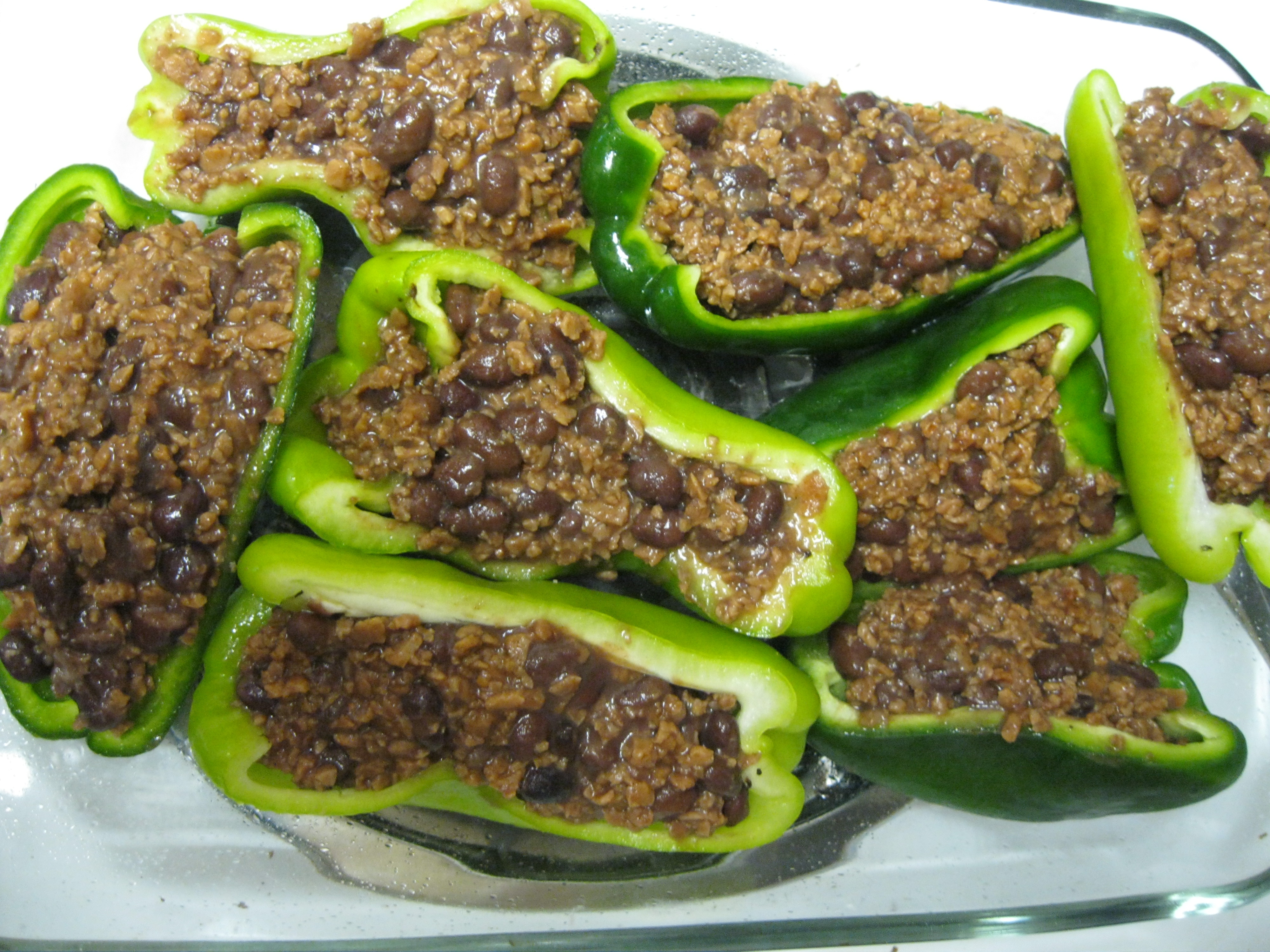
These are campesino and poblano peppers. When you cut them in half, they’re a great little natural bowl for delicious food and this adventure is no different. This was a last minute dinner.

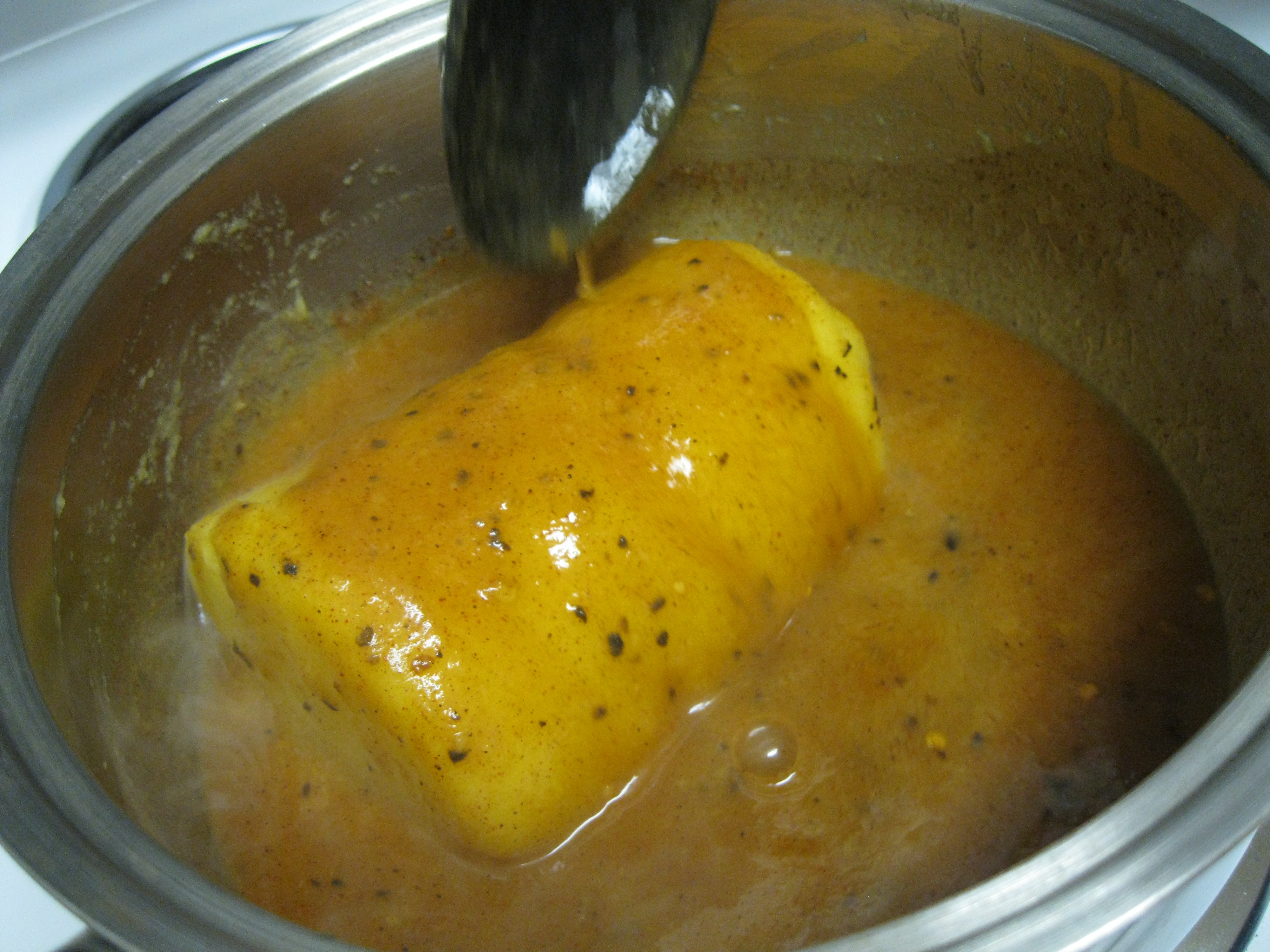
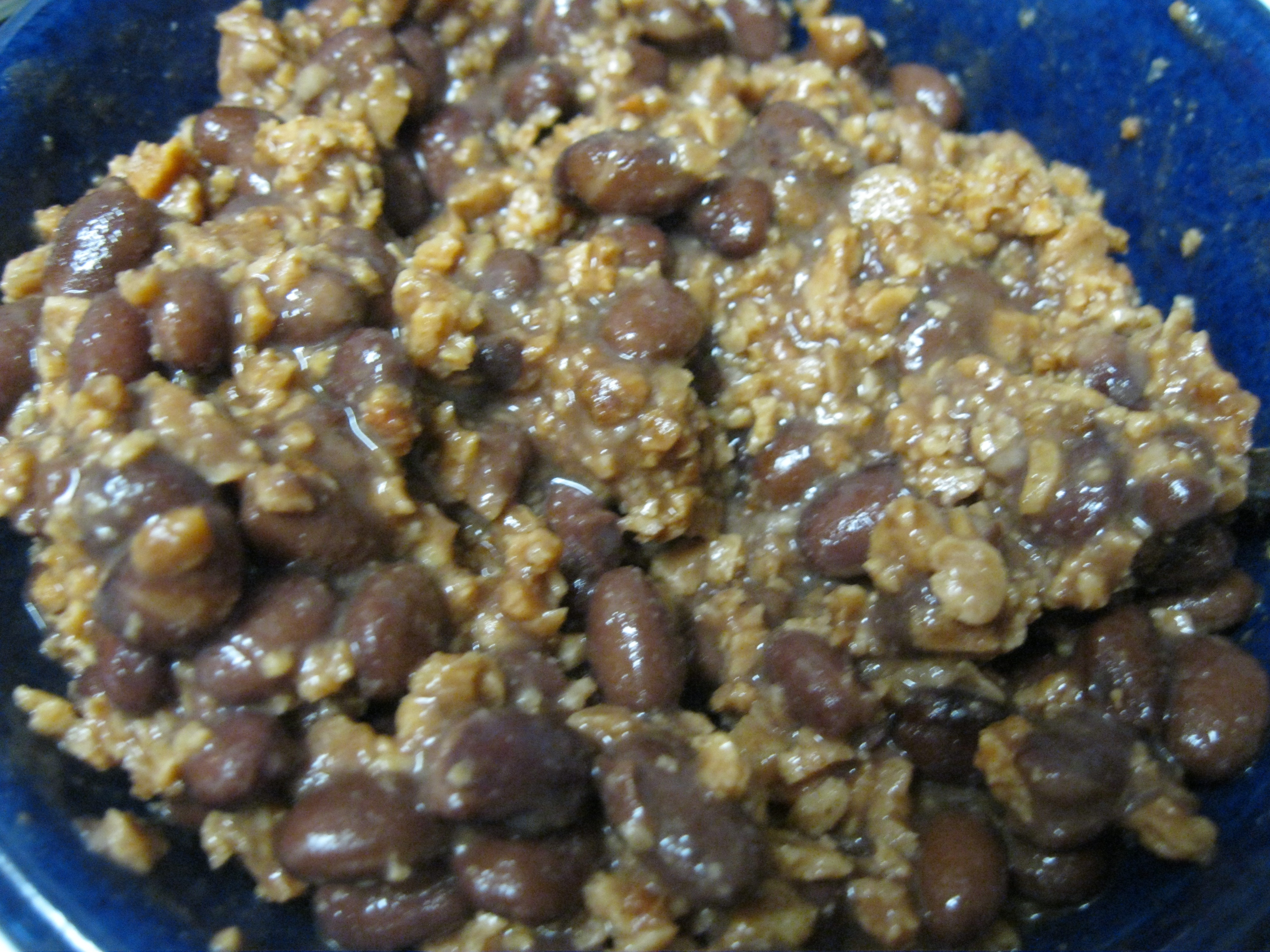
We just mixed a can of black beans with some flake red pepper and some Dixie Diner Ham (NOT!), stuffed the poblano peppers, and baked them for 30 minutes. Then we sprinkled some Daiya over it and baked for another 10 minutes.

Then we ate them with some salsa verde and Dixie Diner Chicken and Cheese Fajita soup. We’ve been trying a lot of their products, which are mostly flavored textured vegetable protein (TVP to veterans). So far, we’re fans.

We hope you get to try them. Let us know what your favorite Dixie Diner products are… so we can EAT THEM!

This is Brent and Christie, signing off!

Tagged , , , , , , , , , , ,